lauantai 18. tammikuuta 2020

Suomalaisprofessoreiden tutkimusraportti toteaa IPCC:n raportin täysin virheelliseksi

  • Hiilidioksidilla ei ole ilmaston muuttumiseen vaikutusta”, sanovat professorit.
  • Suomalaisprofessoreiden tutkimusraportti — Ainoatakaan virhettä ei ole osoitettu.
  • IPCC:n ilmastomuutosennusteet ovat väärät.
  • Politisoitunut Ilmatieteen laitos kieltäytyy julkisesta tieteellisestä väittelystä ja osa henkilöstöstä haikailee vallankumousta.


Ympäristönsuojelu
64

Suomalaisprofessoreiden tutkimusraportti toteaa IPCC:n raportin täysin virheelliseksi

Suomalaisprofessoreiden tutkimusraportti  julkaistaan artikkelin lopussa PDF-muodossa.

Ilmakehäfysiikan tieteellisen perustan muodostavat termostatiikka ja lämpö- ja virtausdynamiikka, Suomalaisprofessoreiden (teknillisen termodynamiikan professori Pertti Sarkomaa ja lämpö- ja virtaustekniikan ja polttotekniikan professori Seppo Ruottu) tutkimusraportti Climate change and use of fossil fuels  todistaa IPCC:n raportin perustuvan virheellisiin laskelmiin.

Sarkomaa ja Ruottu eivät silti kiistä ilmastonmuutosta. Ilmasto heidän mukaansa muuttuu koko ajan, ja on aina muuttunut.

”Hiilidioksidilla ei ole ilmaston muuttumiseen vaikutusta”, sanovat professorit.

Kommenttiosiossa voitte osallistua ja ottaa kantaa keskusteluun


Suomalaisprofessoreiden tutkimusraportti — Ainoatakaan virhettä ei ole osoitettu

Sarkomaa ja Ruottu ovat opiskelleet, tutkineet, opettaneet ja soveltaneet termostatiikkaa ja virtaus-. ja lämpödynamiikkaa vuosikymmenien ajan ja tuntevat niiden fysikaaliset ja matemaattiset perusteet täydellisesti. Jos professoreiden raportista kukaan ei kykene osoittamaan virheitä, voi todeta, että IPCC:n (Intergovernmental Panel on Climate Change) raportti ei ole uskottava selkänoja suomalaisille poliittisille tulevaisuuden ilmastopoliittisille päätöksille. Jos kukaan ei pysty osoittamaan suomalaisprofessoreiden 50 vuoden tieteelliseen työhön perustuvasta tutkimuksesta virheitä, koko maailmanjärjestys muuttuu IPCC:n väitteiden virheitten tullessa yleiseen tietoon.


Sarkomaa ja Ruottu ovat toimittaneet tutkimusraporttinsa mm. seuraaville tahoille pyytäen niitä soittamaan edes raportin yleistajuisen osan mahdolliset virheet:
  1. IPCC:n sihteeristö
  2. WMO:n pääsihteeri Petteri Taalas
  3. Kaikille Ilmastopaneelin jäsenille
  4. Ilmatieteen laitoksen tieteellinen johtaja, professori Ari Laaksonen
  5. Ilmatieteen laitoksen pääjohtaja, professori Juhani Damski
  6. Sitran yliasiamies Mikko Kosonen
  7. Sitran ilmastoasiantuntija Mariko Landström
  8. Sitran ilmastoasiantuntija Oras Tynkkynen
  9. Akateemikko Markku Kulmala
  10. Akatemia professori, Helsingin yliopiston meteorologian professori Timo Vesala
  11. Julkaisun Zelinka et. al., Clearing clouds of uncertainty, Nature Climate Change, Vol 7, October 2017 kirjoittaja Mark Zelikna
  12. Aalto yliopiston professori Peter Lund
  13. Tutun yliopisto professori Jyrki Kauppinen
  14. Lappeenrannan teknillisen yliopiston professori Tero Tynjälä

Ainuttakaan virhettä ei ole osoitettu.

IPCC ei tee itse ilmastotutkimusta eikä sillä ole siihen tarvittavaa osaamistakaan

IPCC:llä ja sen seurantaraporttien tuhansilla kirjoittajilla on voimakas ja kiistaton yhteinen intressi, joten seurantaraporttien kirjoittajien raportteihin perustuviin IPCC:n väitteisiin tulisi jo jääviyssyistä suhtautua kriittisesti.
Nyt kuitenkin media ja poliittiset tahot ovat hyväksyneet IPCC:n ilmastoraportin sellaisenaan ilman kritiikkiä ja ilman vertailevaa tieteellistä tutkimusta.

Koska suomalaiset tiedostusvälineet ovat katsoneet viisaaksi estää Sarkomaan ja Ruottun tutkimustulosten tulon yleiseen tietoon, julkaisemme raportin kokonaisuudessaan.


IPCC:n ilmastomuutosennusteet ovat väärät

Aiheesta on keskusteltu kiivaasti ja heidän tutkimuksiaan on kyseenalaistettu, koska he sanovat, että IPCC:n ilmastomuutosennusteet perustuvat täysin virheellisiin laskelmiin.

 Lue Sarkomaan ja Ruottun edellinen teksti tästä.

”Olemme käyneet tutkimusraportistamme perusteellisen keskustelun Suomen johtavien ”ilmastomuutosasiantuntijoitten” kanssa (Helsingin yliopiston meteorologian professori Timo Vesala ja Ilmatieteen laitoksen tieteellinen johtaja professori Ari Laaksonen). - Kumpikaan ei ole voinut osoittaa tutkimusraportissamme ainuttakaan virhettä. Ei myöskään Sitran asiantuntijat tai muitten suomalaisten yliopistojen professorit. Kun saamme tutkimusraportillemme riittävän julkisuuden, IPCC:n väärät väitteet kumoutuvat”, sanoo Seppo Ruottu.

Raportti luettavissa täältä

Pertti Sarkomaa ja Seppo Ruottu ovat aloittaneet tutkimuksensa 70-luvun lopulla. Raportti on pitkä, mutta siinä kansantajuinen osio, jonka jokaisen suomalaisen päättäjän kannatta lukea.

Voit ladata PDF:n raportista tästä »


Toimittajalta

Ilmastoasioiden tarkastelu pitää perustua faktaan

Ilmastokeskustelu on tärkeä koko maapallon ja Suomen kannalta.
Meidän pitää tehdä oikeita johtopäätöksiä luotettavien tieteellisten tutkimusten pohjalta.
Meidän ei saa tehdä ensin johtopäätöksiä, joiden tukemiseksi hankitaan tutkimuksia, se ei ole tiedettä.
Älyllisen ilmastokeskustelun pitää perustua faktoihin, ei mielipiteisiin.

http://www.maaseutumedia.fi/suomalaisprofessoreiden-tutkimusraportti-kumoaa-ipccn-raportin/


 ___


Professorit Sarkomaa & Ruottu:
IPCC:n väitteet hiilidioksidin vaikutuksesta globaaleihin lämpötiloihin perustuvat virheellisiin laskelmiin


Päivitys 8.11.2019 – Suomen Ilmatieteen laitos ja Suomen Ilmastopaneeli ovat kieltäytyneet vastaamasta professorien Sarkomaa & Ruottu osoittamaan kritiikkiin. Vaikeneminen merkitsee tosiasiallisesti alla olevassa kritiikkidokumentissa osoitettujen IPCC:n virheiden myöntämistä. Olen lisännyt tämän tekstin professorien Sarkomaa & Ruottu pyynnöstä. (OT)


Kirjoitin 14.8.2019 politisoituneesta Suomen Ilmatieteen laitoksesta pitkän analyysin. Kirjoitus liittyi mm. Ilmatieteen laitoksen haluttomuuteen keskustella ilmakehän perusfysiikasta kahden arvostetun suomalaisprofessorin kanssa.

 Suomalaiset professorit, teknillisen termodynamiikan professori Pertti Sarkomaa ja lämpö- ja virtaustekniikan ja polttotekniikan professori Seppo Ruottu julkaisivat 29.7.2019 pitkän raportin jota he ovat neljä viime vuotta koostaneet: Climate change and use of fossil fuels. Tutkimuksessa on kyse kritiikistä Kansainvälisen ilmastopaneelin IPCC:n ja sen etäpesäkkeen Suomen Ilmatieteen laitoksen keskeiseen väitteeseen, jonka mukaan hiilidioksidi vaikuttaa merkittävästi tai jopa ainoana tekijänä ilmaston lämpötiloihin.


Professorien johtopäätös ilmastonmuutoksesta on selvä: Kansainvälisen ilmastonmuutospaneelin IPCC:n väitteet ja ennusteet perustuvat vääriin laskelmiin. Ihmisen osuus on mitätön verrattuna luonnollisiin muutoksiin.

Professorien johtopäätöksen voi havaita kukin aivan itsekin, sillä ilmakehän lämpötila ei ole noussut yli 21 vuoteen, eikä korrelaatiota hiilidioksidin ja lämpötilan välillä ole. Lämpötila on ollut hitaassa laskussa jo 7000 vuotta, kuten tämän artikkeli otsikkokuva osoittaa. Laskun ovat keskeyttäneet välillä ajoittaiset lämpökaudet, jollaisella nytkin elämme. Lämpötila on kuitenkin huomattavasti alhaisempi kuin 7000 vuotta sitten, jolloin lämpötila helli Suomea siten, että sankka puusto kasvoi pohjoisen Lapin tuntureilla, jossa kasvaa nyt vain vaivaiskoivua.

- Jatkuu linkissä:

https://www.ossitiihonen.com/2019/11/05/professorit-sarkomaa-ruottu-ipccn-vaitteet-hiilidioksidin-vaikutuksesta-globaaleihin-lampotiloihin-perustuvat-virheellisiin-laskelmiin/

___


PERTTI SARKOMAA, professor emeritus,
CURRICULUM VITAE


1. Basic information
2. Academic education and expertise
3. Most important posts and positions


1. BASIC INFORMATION

Name
SARKOMAA PERTTI JUHANI
Born
1941 in Finland
Family status
Married 1965, wife Marjatta Sarkomaa
Position
Professor emeritus

Military rank
Major


2. ACADEMIC EDUCATION AND EXPERTISE

Doctor of Technology
Department of Mechanial Engineering, Helsinki University of Technology (HUT), (Aalto University), 1981
Business Management Program 4
Helsinki School of Economics and Business Administration (Aalto University), (1973-1974)
Master of Science
Department of Mechanical Engineering, HUT, (Aalto University), 1970
Bachelor of Science
Department of Mechanical Engineering, Tampere Institute of Technology, 1965
Expertise
Technical thermodynamics
Mechanical engineering
Heat transfer
Fluid dynamics
Multiphase and multicomponent flow
Combustion
Reaction kinetics
Power plant technology
Process technology
Heating, Ventilating, Air-Conditioning and Refrigeration technology
Energy economics
Product development and optimization
Infrared Technology
Weapon, blasting and quarrying technology
Management and leadership


3. MOST IMPORTANT POSTS AND POSITIONS

  • Professor, Technical Thermodynamics, LUT 1972 - 2009
  • Head of the Laboratory of Thermodynamics, LUT, 1972 - 2009
  • Senior Scientist, Academy of Finland, 5 times 2003, 1985, 1980, 1977 and 1976
  • Member of the Board of Lappeenranta University of Technology 1973-84 and 1995-98
  • Member of the Scientific Council of Lappeenranta University of Technology
  • Dean of Department of Energy Technology, LUT 1995-98
  • Head of Section of Thermodynamics and Environmental Engineering, LUT 1996-2001
  • Head of Section of Heat and Fluid Dynamics, LUT 1989-95
  • Head of Section of Energy Technology, LUT 1972-85
  • Senior Assistant, Applied Thermodynamics, HUT (Aalto University) 1968-70
  • Member of the board of some companies
  • Research Manager of Energy Research of Finnish Forest Industry and Energy Research Project of Process Industry financed by SITRA and Central Organization of Finnish Forest Industry and Confederation of Finnish Industry 1974-77
  • R&D manager or President, R&D Company EINCO OY 1983-90
  • Project Engineer, Process Design, Department of Industry, Ekono Oy 1970-72
  • Design Engineer, HVAC Engineering Office Timo Heliövaara 1966-68
  • Design Engineer, HVAC Engineering Office Erkki Leskinen 1964-66
https://www.perttisarkomaa.fi/

___


Päivitys

Professorit Sarkomaa & Ruottu: IPCC:n väitteet hiilidioksidin vaikutuksesta globaaleihin lämpötiloihin perustuvat virheellisiin laskelmiin

Julkaistu
Päivitys 8.11.2019 – Suomen Ilmatieteen laitos ja Suomen Ilmastopaneeli ovat kieltäytyneet vastaamasta professorien Sarkomaa & Ruottu osoittamaan kritiikkiin. Vaikeneminen merkitsee tosiasiallisesti alla olevassa kritiikkidokumentissa osoitettujen IPCC:n virheiden myöntämistä. Olen lisännyt tämän tekstin professorien Sarkomaa & Ruottu pyynnöstä
. (OT)

Kirjoitin 14.8.2019 politisoituneesta Suomen Ilmatieteen laitoksesta pitkän analyysin. Kirjoitus liittyi mm. Ilmatieteen laitoksen haluttomuuteen keskustella ilmakehän perusfysiikasta kahden arvostetun suomalaisprofessorin kanssa. Suomalaiset professorit, teknillisen termodynamiikan professori Pertti Sarkomaa ja lämpö- ja virtaustekniikan ja polttotekniikan professori Seppo Ruottu julkaisivat 29.7.2019 pitkän raportin jota he ovat neljä viime vuotta koostaneet: Climate change and use of fossil fuels. Tutkimuksessa on kyse kritiikistä Kansainvälisen ilmastopaneelin IPCC:n ja sen etäpesäkkeen Suomen Ilmatieteen laitoksen keskeiseen väitteeseen, jonka mukaan hiilidioksidi vaikuttaa merkittävästi tai jopa ainoana tekijänä ilmaston lämpötiloihin.

Professorien johtopäätös ilmastonmuutoksesta on selvä: Kansainvälisen ilmastonmuutospaneelin IPCC:n väitteet ja ennusteet perustuvat vääriin laskelmiin. Ihmisen osuus on mitätön verrattuna luonnollisiin muutoksiin.

Professorien johtopäätöksen voi havaita kukin aivan itsekin, sillä ilmakehän lämpötila ei ole noussut yli 21 vuoteen, eikä korrelaatiota hiilidioksidin ja lämpötilan välillä ole. Lämpötila on ollut hitaassa laskussa jo 7000 vuotta, kuten tämän artikkeli otsikkokuva osoittaa. Laskun ovat keskeyttäneet välillä ajoittaiset lämpökaudet, jollaisella nytkin elämme. Lämpötila on kuitenkin huomattavasti alhaisempi kuin 7000 vuotta sitten, jolloin lämpötila helli Suomea siten, että sankka puusto kasvoi pohjoisen Lapin tuntureilla, jossa kasvaa nyt vain vaivaiskoivua.

Sarkomaa&Ruottu (ja allekirjoittanutkin) ovat yrittäneet saada Ilmatieteen laitoksen ottamaan kantaa S&R tutkimukseen julkisesti ja kootusti. Tällöin saisimme kerrankin käyntiin keskustelun muustakin kuin ’Maapallo paistuu’ -näkökulmasta. Tyypillinen tapa Ilmatieteen laitoksella on nimittäin ollut vaieta kritiikki kuoliaaksi vedoten tällöin kriitikon taustaan tms. kuten nytkin yritettiin.

Tässä tapauksessa Ilmatieteen laitos kieltäytyi ottamasta kantaa kootusti asiaan, vaan perusti tutkimusprofessori Ari Laaksosen toimesta Twitteriin mustamaalauskampanjan. Kyseessä on Ilmavaivojen laitokselta aivan käsittämätön toimintatapa. Ilmeisesti laitoksella ei ole osaamista perusfysiikasta, jotta he uskaltaisivat antautua väittelyyn kokeneiden ’kovan tieteen’ edustajien kanssa. Väittelyä on käyty julkisuuden sijasta jonkin verran sähköpostissa.

Väittely on osoittanut merkittävän eron kovan tieteen edustajien ja IPCC:hen sidoksissa olevien tutkijoiden, lähinnä meteorologien, välillä. Jo viisi suomalaista professoria on julkisesti ilmaissut kantansa, että ihminen ei ole syyllinen ilmastonmuutokseen. Tässä mainittujen Pertti Sarkomaan ja Seppo Ruotun lisäksi fysiikan professori Jyrki Kauppinen, biologian professori Antero Järvinen ja metsäntutkimuksen professori Kari Mielikäinen pitävät luonnollisia vaikutuksia ihmisen vaikutusta suurempina.

Kymmenet tuhannet tieteentekijät ympäri maailman ovat kertoneet vastaavasti kantansa. Viimeisimpänä yli 500 tieteilijää lähetti YK:n pääsihteerille julkilausumansa, jossa he kertoivat selväsanaisesti, että ’Ilmastohätätilaa ei ole’. Nämä yleisen ilmastohysterian vastaiset kannat vaietaan Suomen punavihreässä valtamediassa lähes täysin. Tieto tulee usein esille vain yksittäisten ihmisten blogeissa tai pienmedioissa kuten tässä Maaseutumedian jutussa: ”… perehtyminen IPCC:n ilmastomalleihin osoitti, että niiden tuhannet laatijat eivät ymmärrä ilmastotutkimuksen tieteellisen perustan muodostavien termostatiikan ja -dynamiikan alkeitakaan.”

Mikäli IPCC:n kannalta kriittistä informaatiota pääsee mediassa läpi, niin siihen väitetään yleensä vastauksena, että olisi olemassa jokin käsittämätön konsensus, vaikka ko. väite on osoitettu silkaksi valehteluksi useita kertoja. Toinen toistuva väite on, ettei jotain kriittistä raporttia ole julkaistu vertaisarvioidussa lehdessä. Tässä tapauksessa on huomattava, että väitteen esittäjä on IPCC, jolla todistustaakka väitteelleen ihmiskunnan syyllisyydestä on. Sarkomaa&Ruottu esittävät kritiikkiä, jota ei ole edes henkistä velvoitetta julkaista missään. Tieteessä on sitä paitsi julkaistu kosolti tutkimuksia, jotka eivät tue väitettä ihmisen ’syyllisyydestä’. Näistä ei vaan yleensä kuule mitään vihervasemmalle kallellaan olevassa mediassa.

Professorit Sarkomaa&Ruottu ovat koonneet väittelyidensä perusteella 3.11.2019 päivätyn uuden suomenkielisen kritiikkidokumentin, jonka tekstin julkaisen alla sellaisenaan. Mitä pidempään väittelyä on käyty, sitä enemmän kummallisuuksia IPCC-vetoisesta ’tieteestä’ on löytynyt. Kritiikki on ilmastohysterian kannalta murskaavaa.


IPCC:n väitteet hiilidioksidin vaikutuksesta globaaleihin lämpötiloihin perustuvat virheellisiin laskelmiin

Johdanto

Ilmasto on aina muuttunut ja muuttuu tavalla, jota ei voi ennustaa ajallisesti a) koska siihen vaikuttavat monet ennustamattomat tekijät, b) ilmastomallien fysikaalisten epätarkkuuksien vuoksi c) mallien numeeristen epätarkkuuksien vuoksi. Sen sijaan on mahdollista laskea olennaisesti oikein, miten ilmakehän hiilidioksidipitoisuuden muutos vaikuttaa globaaliin ilmastoon.

Emeritusprofessorit Pertti Sarkomaa ja Seppo Ruottu (jäljempänä Kirjoittajat) ovat tutkineet ilmakehän hiilidioksidin vaikutusta globaaleihin lämpötiloihin ja IPCC:n ilmastomalleja ja laatineet tutkimuksistaan raportin ”Climate Change and Use of Fossil Fuels” (jäljempänä Raportti). Palautteen saamiseksi Kirjoittajat ovat lähettäneet Raportin mm. kaikille suomalaisille yliopistoille, WMO:n pääsihteeri Petteri Taalakselle, Sitralle, IPCC:n sihteeristölle ja Ilmatieteen laitokselle.

Palautetta Kirjoittajat ovat saaneet vain akatemiaprofessori, Helsingin yliopiston meteorologian professori Timo Vesalalta ja Ilmatieteen laitoksen tieteellinen johtaja, professori Ari Laaksoselta. Vesalan palaute oli, että hänellä ei ollut valmiuksia Raportin arviointiin. IPCC:n ilmastomalleja kategorisesti puolustavan Laaksosen kanssa syntyi sähköpostitse käyty väittely.

On pöyristyttävää ja tuhoisaa, että maailmanlaajuisesti tiedotusvälineitten, tutkijoitten, poliitikkojen, valtioitten päämiesten, talouden ja teollisuuden vaikuttajien ja ilmastopaneelien toimia ohjaavat järjettömät lämpenemisennusteet, jotka vaihtelevat välillä 2 – 5 ℃ riippuen pilvipalautteesta, jota ei fysikaalisesti ole olemassa. Kirjoittajat toivovat, että tämä yleistajuinen todistus IPCC:n laskelmien virheistä saa IPCC:n väitteisiin dogmaattisesti uskovat lukijat tarkistamaan kantansa.

Yhteenveto

Väittelyssä Laaksonen ei osoittanut Raportissa ainoatakaan virhettä ja kommentoi Raportin tuloksista vain Appendix 4:n kuvaa 1 ja sitäkin väärin. Kirjoittajat osoittavat Virheitten 1 – 7 kommenteissaan, että IPCC:n ilmastomallit a) perustuvat fysikaalisesti karkeisiin approksimaatioihin b) fysikaalisesti järjettömiin oletuksiin c) pilvipalautteeseen, jota ei ole fysikaalisesti olemassa. Kukin Virheistä 1 – 7 tekee IPCC:n ilmastomalleista käyttökelvottomia tutkittaessa hiilidioksidin vaikutusta globaaleihin keskilämpötiloihin.

Keskeiset tulokset Raportin SRclimate mallilla tehdyistä laskelmista on esitetty Raportin Appendix 4:n kuvissa 1 – 10. Ne osoittavat, että SRclimate mallin tulokset ovat empiirisen tiedon epävarmuuden puitteissa oikeat ja malli vastaa loogisesti reunaehtojen kaikkiin muutoksiin, Näin ollen SRclimate malli kuvaa oikein globaalia ilmastoa ja osoittaa, että hiilidioksidin vaikutus globaaleihin lämpötiloihin on merkityksetön.

IPCC:n ilmastomallien virheet

Virhe 1: Mallit ovat fysikaalisesti täysin virheellisiä

Laaksonen: … Miksi haaskaisin aikaani tällaisten satujen perusteella kirjoitettujen yhtälöiden tutkimiseen?

Sarkomaa ja Ruottu: On pöyristyttävää, että Ilmatieteen laitoksen tieteellinen johtaja väittää, että luonnonlakeihin perustuvat ilmakehän kaasun, pisaroitten ja partikkelien alkuaine-, yhdiste-, liikemäärä-, energia- ja lukumäärätaseet ovat satuja. Laaksosen täytyy ymmärtää väitteensä järjettömyys, joten väite osoittaa Laaksosen kategorisen sitoutumisen IPCC:n väitteitten puolustamiseen. Tarvittaessa vastoin parempaa tietoaan.

Kaikkien kemiallisten ja fysikaalisten prosessien ja luonnonilmiöitten matemaattisen mallinnuksen tulee perustua termostatiikkaan, termodynaamisiin yhdisteitten, liikemäärän ja energian siirtoyhtälöihin, taseaksioomaan ja systeemin osien alkuaine-, yhdiste-, liikemäärä-, energia- ja lukumäärätaseisiin. IPCC:n ilmastomallit eivät täytä tätä vaatimusta miltään osin, jonka vuoksi ne ovat lähtökohdiltaan täysin virheellisiä ja osoittavat, etteivät niiden laatijat ymmärrä termostatiikkaa ja -dynamiikkaa.

Virhe 2: Mallien matemaattinen lähtökohta on väärä

IPCC:n 3-D aikariippuvien ilmastomallien käyttökelpoisuus edellyttäisi, että ilmakehän hetkelliset ja paikalliset tilat kuten kaasun, hiukkasten ja pisaroitten nopeudet, yhdistekoostumukset, lämpötilat ja pisaroitten ja hiukkasten lukumäärätiheydet pystyttäisiin ennustamaan oikein kaikkialla ilmakehässä kymmenien vuosien laskenta-ajalle. Tämä ei ole eikä koskaan tule olemaan mahdollista. Sen vuoksi kaikki aikariippuvat ilmastomallit ovat lähtökohdaltaan täysin vääriä. Hiilidioksidin vaikutus globaaleihin keskilämpötiloihin voidaan laskea oikein vain ilmakehän globaalilla ajasta riippumattomalla mallilla.

Virhe 3: Oletus, että kaasun ja pisaroitten lämpötilat ovat samoja

Laaksonen: … te keksitte satuja joiden mukaan pisarat ovat ilmaa kylmempiä, mistä syystä ilmastomallit ovat pielessä.

Sarkomaa ja Ruottu: Termostatiikan 1.:n pääsäännön mukaan lauhtuminen ilmakehässä edellyttää energiavirtaa kaasun ja pisaran välillä, joka termostatiikan 2.:n pääsäännön mukaan edellyttää lämpötilaeroa kaasun ja pisaran välillä. Näin ollen veden lauhtuessa pisaraan tai höyrystyessä pisarasta kaasun ja pisaran välillä täytyy olla lämpötilaero. Virhe 3 on Virheen 1 väistämätön seuraus. Virheestä 3 seuraa, että IPCC:n ilmastomalleissa globaaleja lämpötiloja dominoiva globaali pilvisyys joudutaan kuvaamaan heuristisin ja virheellisin korrelaatioin, mikä johtaa virheellisiin globaaleihin lämpötiloihin.

Virhe 4: Pilvet vaikuttavat taannehtivasti ilmakehän heijastukseen

Laaksonen: Tietenkin pilvet jäähdyttävät pintaa ja pienentävät globaalia keskilämpötilaa, ei siitä kukaan ole eri mieltä. Pilvipalautteessa on kuitenkin kyse takaisinkytkennästä eikä pilvien suorasta vaikutuksesta…

Sarkomaa ja Ruottu: Jokainen on havainnut, että aina kun auringon edessä oleva pilvisyys lisääntyy, auringon säteily maan pinnalle vähenee viiveettömästi, ja päinvastoin. Tämä johtuu siitä, että auringon säteilyn heijastus suurenee pilvisyyden lisääntyessä. Ei ole ainoatakaan havaintoa siitä, että pilvisyyden muutosten vaikutukset auringon säteilyn heijastukseen olisivat aikojen kuluessa muuttuneet. Säteilyenergiansiirron matemaattinen teoria todistaa nämä empiiriset havainnot oikeiksi. Sen mukaan pilvillä ei ole mitään takaisinkytkentää (pilvipalautetta) pilvien vaikutukseen maapallon pinnalle tulevaan auringon säteilyyn. Pilvillä on vain hetkellisestä pilvisyydestä kausaalisesti määräytyvä yhteys auringon säteilyn heijastukseen. Näin ollen pilvien takaisinkytkentä eli pilvipalaute on nolla ja sen vuosikymmeniä jatkunut tutkimus tieteen historian käsittämättömimpiä kömmähdyksiä.

Virhe 5: Pilvisen taivaan keskimääräinen prosenttiosuus määrää ilmakehän heijastuksen

Laaksonen: …Tällä hetkellä pilvet peittävät planeetasta noin 56% jos huomioidaan vain optisesti tiheät pilvet, ja noin 68% jos huomioidaan myös optisesti ohuemmat pilvet. … Jos tarpeeksi pitkään mitataan, voidaan saada keskimääräinen prosenttiosuus. Tämä määrää maapallon albedon.

Sarkomaa ja Ruottu: Yleiskielessä pilvisyydellä tarkoitetaan paikallista yläpuolisen ilmakehän pilvisyyttä, jota kuvaa kvantitatiivisesti ilmakehän nestemäisen veden määrä maapallon pintaalayksikköä kohti (kg/m2). Kutsumme tätä pilvisyyttä pintapilvisyydeksi, joka on nestemäisen veden tilavuustiheyden eli tilavuuspilvisyyden (kg/m3) ilmakehän merkitsevän korkeuden yli laskettu integraali. Koska ilmakehän hetkellinen ja paikallinen heijastussuhde on tilavuuspilvisyyden epälineaarinen funktio, hetkellinen ja paikallinen pintapilvisyys ei määrää ilmakehän hetkellistä ja paikallista heijastussuhdetta eli albedoa. Näin ollen ilmakehän pitkänajan keskimääräinen pintapilvisyys, saati kvantitatiivisesti täysin epämääräinen pilvisen taivaan keskimääräinen prosenttiosuus, ei määrää ilmakehän pitkänajan globaalia heijastussuhdetta eli albedoa. Sen määrää ilmakehän globaali tilavuuspilvisyys.

Virhe 6: Pilvisyyden lisääntyminen pienentää ilmakehän heijastussuhdetta

Laaksonen: … Tällä hetkellä näyttää siltä, että pilvipalaute olisi lievästi positiivinen, mutta en yhtään ihmettelisi jos vastakkaisiakin tuloksia vielä saadaan.

Sarkomaa ja Ruottu: Meteorologien vuosikymmeniä jatkunut pohdiskelu pilvien takaisinkytkennän vaikutuksen etumerkistä on surkuhupaisaa, koska pilvillä ei ole mitään takaisinkytkentävaikutusta. On matemaattinen itsestäänselvyys, että samanlaisten pisaroitten samanlaisen auringon säteilyn yhteinen heijastus on suoraan verrannollinen pisaroitten määrään.

Tämä itsestäänselvyys on myös säteilyenergiasiirron radianssiyhtälön keskeinen lähtökohta. Pilvien heijastus ei voi pienetä pilvisyyden suuretessa. Kun pilvien vaikutus maapallon pinnan keskilämpötilaan lasketaan säteilyenergiasiirron teorian mukaisesti, todetaan, että maapallon pinnan lämmetessä lisääntyvä pilvisyys vastustaa voimakkaasti lämpenemistä ja päin vastoin. Pilvet vastustavat voimakkaasti kaikkia maapallon pinnan keskilämpötilan muutoksia. Tämä ei kuitenkaan johdu kuvitteellisesta pilvipalautteesta, vaan pilvien välittömästä vaikutuksesta.

Virhe 7: Heuristisen pilvipalautteen laskenta perustuu kehäpäätelmään

Laaksonen: … Mallit tekevät mitä tekevät, ja vasta mallituloksista voidaan analysoida oliko palaute negatiivinen vai positiivinen.

Sarkomaa ja Ruottu: Pilvipalautteen laskenta on järjetöntä, koska pilvipalautetta ei fysikaalisesti ole olemassa. Lisäksi laskenta sisältää kehäpäätelmän, joten kuvitteellinen pilvipalaute voidaan laskea vain kuvitteellisille ilmastoille. Kuvitteellisten ilmastojen valinnoilla pilvipalautteille, ja niiden perusteella lasketuille hiilidioksidipitoisuuden muutoksen aiheuttamille maapallon pinnan globaalin keskilämpötilan muutoksille saadaan mitä tahansa lukuarvoja. Esimerkiksi IPCC:n lämpenemisennusteitten järjettömät 2 – 5 ℃.

https://www.ossitiihonen.com/2019/11/05/professorit-sarkomaa-ruottu-ipccn-vaitteet-hiilidioksidin-vaikutuksesta-globaaleihin-lampotiloihin-perustuvat-virheellisiin-laskelmiin/

___


Politisoitunut Ilmatieteen laitos kieltäytyy julkisesta tieteellisestä väittelystä ja osa henkilöstöstä haikailee vallankumousta

Julkaistu

Suomalaiset professorit, teknillisen termodynamiikan professori Pertti Sarkomaa ja lämpö- ja virtaustekniikan ja polttotekniikan professori Seppo Ruottu julkaisivat 29.7.2019 tutkimuksensa jota he ovat neljä viime vuotta koostaneet: Climate change and use of fossil fuels.

Heidän johtopäätöksensä ilmastonmuutokseen on selvä: Kansainvälisen ilmastonmuutospaneelin IPCC:n väitteet ja ennusteet perustuvat vääriin laskelmiin. Ihmisen osuus on mitätön verrattuna luonnollisiin muutoksiin.

Tutkimuksesta on julkaistu useampi kirjoitus Maaseutumedia-verkkopalvelussa:

http://www.maaseutumedia.fi/suomalaisprofessoreiden-tutkimusraportti-kumoaa-ipccn-raportin/

http://www.maaseutumedia.fi/professorit-ipccn-ilmastohysteria-on-uskonto-ilman-loogisuutta/


Päämediat ovat olleet tästäkin yleisen ilmastohysterian kiistävästä tutkimuksesta hipihiljaa.

Saman ovat kokeneet monet muutkin, esimerkiksi professorit Antero Järvinen ja Jyrki Kauppinen, sekä tekniikan tohtorit Jukka Leppälahti ja erityisesti Antero Ollila, jonka työstä media vaikenee lähes tyystin.

Ollila on julkaissut kymmeniä blogikirjoituksia ja tutkimuksia aiheesta. Kaikki yllä mainitut ovat päätyneet samalle kannalle kuin Sarkomaa&Ruottu ja monet muut. Tyypillinen tapa suhtautua kriitikoiden tutkimuksiin tai näkemyksiin on ollut leimata kriitikko ’denialistiksi’, jonka väitetään kieltävän ilmastonmuutoksen tai jopa koko ilmaston (sic!). Tyypillisesti kriitikot eivät kiistä, ettei ilmasto muuttuisi, vaan ovat kriittisiä ihmisen osuudesta kokonaisuudessa. Denialisti-sanalla kriittiset tieteilijät yhdistetään myös holokaustin kieltäjiin. Törkeää toimintaa medialta ja osalta tutkijoista.

Oman maallikon näkemykseni (vs. ilmastopapisto) olen kertonut tässä blogissa, tiivistetysti tässä kirjoituksessa: https://www.ossitiihonen.com/2019/04/09/kylmia-tosiasioita-hiilidioksidista-co2/

Ilmastotiedettä pidetään monimutkaisena, mitä se onkin, mutta ei tarvita kovin kummoista päättelykykyä huomata, että ilmasto on kaoottinen järjestelmä, josta lämpötilan ennustaminen luotettavasti on mahdotonta. Muuttujia on yksinkertaisesti liikaa, eikä niiden arvoja usein tiedetä. Monesti arvot ovat vain parhaita arvioita. Yhden muuttujan arvon muutos muuttaa lopputulosta merkittävästi. Kaikkia kokonaisuuteen vaikuttavia tekijöitä ei edes tunneta. Tunnetuista tekijöistäkin esimerkiksi tulivuorenpurkaukset ja meteorit ovat ennustamattomia. Tällaiset tapahtumat kaatavat ennusteet täysin.

Ihmisen syyllisyyteen uskoville kiusallisesti maapallon ilmakehä ei ole lämmennyt tilastollisesti merkitsevästi vuoden 1998 jälkeen, vaihdellen toki vuosittain. Näistä vuosista viimeiset neljä vuotta on ollut 15 globaalin aikasarjan mukaan viilenevää.
- Vain yksi aikasarja väittää ilmakehän lämpenevän.


Olen yrittänyt saada Ilmatieteen laitoksen ottamaan kantaa Sarkomaa&Ruotun tutkimukseen julkisesti ja kootusti, jolloin Sarkomaa&Ruottu voisivat vastata kritiikkiin. Tällöin saisimme kerrankin käyntiin keskustelun muustakin kuin ’Maapallo paistuu’ -näkökulmasta. Tyypillinen tapa Ilmatieteen laitoksella on nimittäin ollut vaieta kritiikki kuoliaaksi vedoten tällöin kriitikon taustaan tms. kuten nytkin yritettiin.
Sain yllätyksekseni IL:n tutkimusprofessori Ari Laaksosen vastaamaan kommentteihini Twitterissä, kts. alla.

Kuvan mahdollinen sisältö: 4 henkilöä, hymyileviä ihmisiä
Kuvan mahdollinen sisältö: 6 henkilöä, hymyileviä ihmisiä

Keskustelu haarautui useampaan ketjuun ja siihen osallistui joukko muitakin. Usein minuakin syytettiin ties miksi, myös ’pseudoskeptikoksi’ kuten Laaksonen antoi ymmärtää. Yön yli nukuttuaan Laaksonen päätti jatkaa keskustelua tai oikeammin S&R tutkimuksen mustamaalausta, sillä kumpikaan herroista ei käytä Twitteriä, eikä se oikein vakavaan tieteelliseen väittelyyn sovikaan. Laaksonen jopa loi mustamaalaukseensa oman tägin ’#SRmunaukset’. Tuollainen toiminta on Ilmatieteen laitokselta ala-arvoista. En päädy muuhun johtopäätökseen kuin että IL haluaa vältellä tutkimuksen tuloksesta käytävää julkista väittelyä, jossa tutkimuksen tekijät voisivat puolustaa tutkimustaan. Sarkomaata ja Ruottua, kahta arvostettua professoria, joiden osaaminen kohdistuu aiheeseen, nimiteltiin Laaksosen toimesta amatööreiksi.

Samanlaista keskustelua käytiin myös sähköpostin puolella. Keskustelussa olivat mukana itseni lisäksi mm. tutkimuksen tekijät ja Ilmatieteen laitoksen johto. IL teki selväksi, etteivät he aio kootusti ja julkisesti kommentoida Sarkomaa&Ruotun tutkimusta. Ilmeisesti mustamaalaus Twitterissa jatkuu.

IPCC ja siihen sidoksissa olevat tutkimuslaitokset kuten Ilmatieteen laitos Suomessa ovat ajautuneet ryhmäajatteluun, jossa omien työpaikkojen säilyttäminen ja tutkimusrahoituksen saaminen kannustaa olemaan kritisoimatta nykyistä ’ihminen on syyllinen’ -linjaa.

Näin perussuomalaisesta näkökulmasta katsoen tilanne on aivan selvä. Ilmatieteen laitos on ajautunut punavihreäksi propagandakoneeksi, joka tuottaa jatkuvaa vahvistusta ’ihminen on syyllinen’ -valheelle. Tällä linjalla voidaan sitten perustella verojen korotukset, erilaiset pakkokeinot lihansyöntikieltoineen ja ’hiilijalanjälkien’ kompensointeineen. Itseäni ihmetyttää miten vihervasemmiston lisäksi koko muu poliittinen kenttä on ostanut tämän valheen perussuomalaisia lukuun ottamatta. Tämä johtuu luultavasti valtamedian jatkuvasta luukutuksesta, jossa ovat kunnostautuneet erityisesti Helsingin Sanomat ja YLE. On syntynyt itseään ruokkiva valheen kierre. Kiinnostavasti luen lisääntyvästi kommentteja, joissa kerrotaan miten kyllästyneitä ihmiset ovat jokapäiväiseen syyllistämiseen. Propaganda on kääntynyt itseään vastaan.

IPCC saa tällä hetkellä voimakasta kritiikkiä monesta suunnasta, Suomessa ja kansainvälisesti. Maailmalla on tuhansia ja taas tuhansia tutkijoita ja tutkimuksia, joissa ilmastonmuutoksen todetaan olevan luonnonilmiö. Italialaiset tieteilijät tekivät tuoreen julkilausuman, jossa he sanovat, että ”hiilidioksidin vaikutusta on perusteettomasti paisuteltu, eivätkä katastrofiennusteet ole realistisia”. Suomen ilmastotutkijat sen sijaan allekirjoittelevat julistuksia, joissa he manaavat vallankumousta.

Yllä esillä ollut Ari Laaksonen on viidentoista muun Ilmatieteen laitoksen henkilön kanssa allekirjoittanut Extinction Rebellion (suomeksi Elokapina) -nimisen ääriliikkeen manifestin. Allekirjoittajat edustavat todennäköisesti laitoksen typerintä päätä, sillä he tuskin ovat ottaneet selvää XR-liikkeen päämääristä ja keinoista, jotka ovat väkivaltainen vallankumous ja anarkismi. Itse asiassa toivon, että he ovat vain ’hyödyllisiä idiootteja’, eivätkä XR-liikkeen aktiiveja, jotka ovat valmiita mm. halvaannuttamaan lentoliikenteen drooneilla ja uhraamaan ihmishenkiä valtapyrkimystensä vuoksi.

Ilmatieteen laitokselta XR-liikkeen julkisen manifestin allekirjoittivat ainakin seuraavat henkilöt:

83. Jari Haapala, tutkimusprofessori, Ilmatieteen laitos
165. Havu Pellikka, FM, tutkija, Ilmatieteen laitos
175. Eero Rinne, PhD (Edin.), Ryhmäpäällikkö, Ilmatieteen laitos
186. Jonni Lehtiranta, DI, suunnittelija, Ilmatieteen laitos
377. Dos. Jussi Heinonsalo, INAR/Helsingin yliopisto/Ilmatieteen laitos
397. Tero Mielonen, FT, erikoistutkija, Ilmatieteen laitos
595. Hannakaisa Lindqvist, FT, ryhmäpäällikkö, Ilmatieteen laitos
645. Atte Harjanne, DI, tutkija, Ilmatieteen laitos
754. Juha Antero Karhu, FM, tutkija, Ilmatieteen laitos
758. Risto Makkonen, FT, Ilmatieteen laitos
786. Liisa Kulmala, MMT, tutkija, Ilmatieteen laitos ja Helsingin yliopisto
833. Aki Virkkula, dosentti, Ilmatieteen laitos
964. Jaakko Seppänen, TkT, tutkija, Ilmatieteen laitos
1007. Ari Laaksonen, FT, tieteellinen johtaja, Ilmatieteen laitos
1045. Anu-Maija Sundström, FT, tutkija, Ilmatieteen laitos
1204. Hermanni Aaltonen, FT, vanhempi tutkija, Ilmatieteen laitos


Ilmastotiede-blogisti kirjoitti pitkän analyysin XR-liikkeestä: https://ilmastotiede.wordpress.com/2019/03/28/extinction-rebellion-ilmastotempauksissa-ei-ole-kyse-ilmastosta/

XR-liikkeen manifestin allekirjoittajat löytyvät (ainakin vielä toistaiseksi) täältä: https://t.co/7cLVe12xPm?amp=1

Asiasta kysyttiin myös Ari Laaksoselta myös Twitterissä:

Ilmatieteen laitos vaatisi suursiivouksen ja paluun rehellisen tieteen pariin.

https://www.ossitiihonen.com/2019/08/14/politisoitunut-ilmatieteen-laitos-kieltaytyy-julkisesta-tieteellisesta-vaittelysta-ja-osa-henkilostosta-haikailee-vallankumousta/

__
eof


maanantai 13. tammikuuta 2020

The Forest Jihad

  • Arabic Website Urges Jihadists to Start Forest Fires
  • Abu Mus’ab Al-Suri, The Inspiration Behind ISIS - Part II
  • “System Not Organization”
  • “Open-Front Jihad”
  • Organising the ‘Resistance Call’

Al-Suri’s ISIS: The Way ForwardISIS Tells Followers to Set Forest Fires in U.S., Europe At least four propaganda posters that have appeared on the pro-ISIS Quraysh media outlet have urged followers to "ignite fires" as part of an ongoing jihad against America and its allies.


The “Forest Jihad”

28/10/2008 | by Fighel, Jonathan (Col. Ret.)  


From the beginning of September 2008, a renewed concern emanated from Western intelligence agencies to the effect that Al Qaeda terrorists were planning a “global fireball”, in a departure from its war on the West.[1]

Deliberately lighting forest fires in Europe, the US and Australia, would not only stretch emergency services, but would also leave insurance companies facing multi-billion dollar claims, as the credit crunch bites.[2] The fires would also create a pollution disaster, with billions of tons of climate-change gases escaping into the atmosphere. The so-called “forest jihad” is being championed by Islamic scholars and Osama Bin Laden’s terror strategists who believe setting fire to dry woodlands will produce maximum damage at minimum risk.


Already back in November 2007, radical Islamic forums spelled out the terrorists’ mindset in graphic terms. 

One of the Arabic web sites affiliated with Al Qaeda’s ideas, called “Al-Ikhlas Islamic Network”, posted a long and detailed message, in which it was argued that lighting fires is an effective form of action, justified in Islamic law under the "eye for an eye" doctrine. The posting instructs remembering the "Forest Jihad" during the summer months, noting that "fires cause economic damage and pollution, tie up security agencies and can take months to extinguish.” Imagine, if after all the losses caused by such an event, a jihadist organization were to claim responsibility for the forest fires," the website says, "you can hardly begin to imagine the level of fear that would take hold of people in the United States, Europe, Russia and Australia."… [3]


Interestingly enough, the call explains the reasons for not setting fire to the Amazon forests in Brazil”. The targeted forests are those belonging to the countries, which are at war with the Muslims, (the United States, Europe, Russia, and Australia). Other nations, for example Brazil, are off limits to anyone seeking to burn the Amazon forests, based on the consideration that the rule and the exception to the rule do not apply. Brazil has not joined the armies of the crusade and it has not yet given us cause to respond in any way”.[4]


Another Al Qaeda affiliated website,”Al-Jazeeratalk.net” posted a similar message on 27 December 2007, where supporters were reminded, “not to forget the summer forest jihad”. It added: “This is an invitation to the Muslims of Europe and America, Australia and Russia to burn forests.” [5] The message claims that the burning of trees, as a warfare method, is permitted in Islam and it quotes from the Qur’an to back it up. The “benefits” of the fires, are to cause casualties, hit tourist income, create timber shortages for domestic, industrial use and pharmaceuticals, and stretch emergency services.[6]

Terrorist Arson of Forest’s in Israel: The Palestinian experience

In the late 1980s and early 1990s, arson comprised about one-third of all forest fires in Israel, which is a very large proportion. Some of the sources of this arson were identified as the work of criminals, whose sole aim was to collect the insurance money. However, many instances of arson in the late 1980s were directly related to the Palestinian uprising (the first Intifada). Palestinians have used arson in the past as an insurgency method, as early as the 1920s, 1930s and 1940s, but in the 1980s it was adopted as a highly visible action against Israel. Arson was found to be easy to execute: all one had to do was cross the old border between the West Bank and Israel, which was unguarded and open to all, start a fire in one of the many forests in the hilly areas near the border, and then disappear. According to the International Forest Fire News (IFFN), between 1988 and 1991 the number of fires attributed to arson rose to over 30%, which was explained by an increase in politically motivated arson associated with the Israeli-Palestinian conflict.[7]


There were frequent occurrences of forest fires in areas adjacent to the old "Green Line" border between Israel and the West Bank, during the years 1988-1990. Between 288 and 388 forest fires were caused by arson, which occurred in areas near the old pre-1967 border.[8] In some of the fires, which occurred in northern Israel, Israeli Arab Palestinians were found to be responsible. These fires were extraordinary, given the fact that in 1988, there was a great deal of rain and, as a result, the vegetation was highly combustible.


The Intifada militants also began to systematically burn Israeli fields, orchards and forests, and whilst no lives were lost, considerable damage was caused.[9] Interviews conducted in 1988 with local Fatah leaders from the Tulkarem region, revealed that forests were regarded as the Israel government's property and were therefore a symbol deserving of arson.[10] Setting fires was employed as a tactic, politically motivated, aimed at damaging Israel's economy and exhausting its resources. The Palestinian propaganda increased the perception that forests were used intensively by the State of Israel as a “political tool”, to mark its presence on the ground along the “Green Line”, in order to underline its existing borders after the 1948 war and the creation of the State of Israel, which the Palestinians totally rejected (until the Oslo Accords in 1993).

During the initial Intifada period, Palestinians started dozens of Israeli forest fires, some quite extensive, intentionally as acts of arson for political reasons.[11] The evidence is overwhelming that these were deliberate acts of political sabotage and Palestinian arsonists have been apprehended as a result.[12] The Israeli police have apprehended Palestinians and Israeli Arabs in the act of setting fires, while others confessed to arson after their arrest.[13]

Some fires followed specific calls by underground Palestinian terror organizations to torch forests, and cause economic damage to Israel and its symbols. Incidents of arson proliferated during the period of the first Intifada, the inciting rhetoric was often disseminated in the leaflets, praising arson and call upon Palestinians to burn the land from underneath the Jews.

Some fires followed specific calls by underground Palestinian terror groups. The instances of arson carried out by the Palestinians were in accordance with the instructions issued by the underground leadership,”The Unified National Command of the Uprising ”(Al- Qiyada Al- Wataniyya Al- Muwahada lil-Intifada-Arabic)[14] which published leaflets providing information and instructions to the population. Typewritten leaflets were distributed across the West Bank and Gaza with instructions for action to be taken against Israel.

Leaflet No. 3 of the “Unified National Command of the Uprising” dated to 31 January 1988,” called for a fire to be set underneath the invader’s feet”[15]. Leaflet No. 7, issued on 13 February 1988, contained amongst other directions and instructions to perpetrate violent activities, a call to”..convert the uprising into a continious war of attrition against the occupation and its forces, causing heavy loss of human lives and damage to the political, economic and moral spheres”.[16] A leaflet distributed in the Ramallah region in the West Bank on 10 January 1988, on behalf of “The Women’s Association”(identified with the Fatah, The Palestinian Popular Front, The Palestinian Democratic Front and the Palestinian Communist Party) called to “praise the torching hands”.[17]

Leaflet No. 18, issued on 8 June 1988 by the Palestinian uprising's underground leadership, called for the destruction and burning of the enemy's properties, industry and agriculture. The leaflet presented plans of action, including…"on the 22.6.88 – a general strike - return to the land, sow and improve it - burn the enemy’s (Israel) property, industrial and agricultural facilities”.[18] In 1989, the PLO's Baghdad radio station described methods of arson through which "the orchards and fields of the Zionist enemy can be set ablaze." [19]

During the initial period of the first Palestinian Intifada, Israeli law enforcement and the judiciary system were engaged with countering the arson phenomena. An example demonstrating the Israeli punitive severity in its approach to Palestinian arson of forests is demonstrated in the Israeli Supreme Court verdict in the trial of Muhammad Bin Ali Jaradat (case number 1926/90,8 July 1990).[20] Between October 1988 and July 1989, Jaradat was involved in committing arson, as his Intifada activities. He was found guilty of arson, setting fire to Israeli agricultural property, fields, forests and crops. Jaradat was sentenced to 4 years imprisonment of which a year and a half were actual imprisonment, two and a half years conditional imprisonment and a monetary fine. In its verdict, the Supreme Court stated, "arson has become in recent years a widespread dangerous phenomenon".[21]

The Palestinian Hamas organization was also active (and still is) in projecting the economic Jihad ideology not only on the local arena of confrontation with Israel, but also on the global scale and against the USA. One of the movement's senior leaders, Dr. Abd al Aziz Rantisi, published a written statement on Hamas's official web site calling on Muslims all over the world to wage an economic Jihad against the United States. "Muslims must recruit their financial resources and capabilities to strike and weaken the U.S economy. American-made products must be boycotted, he said, and urged Muslims to offer any kind of possible financial aid and support to the Mujaheedin (Muslim warriors) fighting for the sake of Allah".[22]

Hezbollah

During the second Lebanon war in the summer of 2006, Hezbollah deliberately launched hundreds of “Katyusha” rockets igniting forests in the northern parts of the Galilee, in the north of Israel. Many of the rockets, packed with tons of explosive material, landed and detonated in the forests, vineyards, orchards and open fields in the Galilee. The forests of Israel, which is a largely arid country, have been a major part of the Zionist-Israeli ethos, which Hezbollah intentionally attacked, as a tactic in promoting a demoralization effect that serves its terrorism strategy – terrorism as a psychological-economic warfare. Israel realized the logic in the Hezbollah method as an intention to exhaust Israel’s resources in simultaneously fighting a battleground in south Lebanon with the Hezbollah terrorists and inside Israel, confronting the severe blazing forests caused by Hezbollah, creating huge environmental damage.


The Galilee forests were destroyed, more than 800 fire incidents were reported, and more than 3000 acres of old woodland were blackened by the flames intentionally ignited by the Hezbollah. The scope of damage caused to landscapes and the environment in the Naftali Mountains, Biria forest and all the other forest and natural woodland areas, resulted in almost total destruction. According to an Israel Ministry of Environmental Protection report, the heavy toll on Israel’s natural environment included 800 forest fires, 750,000 burned trees, 12 square kms of burned forests, 66 square kms of burned nature reserves, national parks and open landscapes, 71 square kms of burned pasture land. Excluding overlaps, it is estimated that a total of 120 square kilometers of landscapes were burned, as a result of rocket hits in the summer of 2006.[23] The direct fire fighting operational costs exceeded NIS 20 million (not including physical damage and reconstructions).[24]

Conclusions

The “Forest Jihad” was an existing methodology for many years in the Israeli-Palestinian and Hezbollah conflicts. Forests arson was prevalent in many conflict regions in different parts of the world long before Al Qaeda’s appearance. But Al Qaeda apparently embraced arson as an additional tactic in promoting economic damage to the West, as a political tool to influence public opinion in the West and Western governments. Targeting the economy as a comprehensive radical Islamic ideology is a focal point of its ideology and its inspired operations. Osama bin Laden, called for attacks against the U.S. economy. "It is important to concentrate on the destruction of the American economy"[25] The notion of “Economic Jihad” is not new, following the September 11 attacks in the U.S., Al-Qaeda came out with a series of official statements introducing the idea of economic Jihad. According to al-Qaeda, targeting the U.S economy is one of the main pillars in Bin Laden's strategy of confronting the West.[26]


One of the pillars of Al-Qaeda's operational objectives in its war against the West, is striking at targets of high economic value, the so-called "bleed-until-bankruptcy plan" first made public by Osama bin Laden himself in December 2004.[27]


The execution of such attacks is primarily a function of the terrorists’ performance capabilities, and timing is usually determined by their degree of operational preparedness and their overall operational strategy of maximizing the economic and psychological damage to their adversaries.

The “Forest Jihad” (forest arson) is one manifestation of the “Economic Jihad” tactics, a tool in a variety of options to cause economic direct and indirect secondary damages. As stated in the message below, the radical Islamic logic in setting fires is regarded beneficial for several aspects that have strategic implications.” Typically, these fires take months rather than days to fully extinguish, this will temporarily hamper the export of timber, used primarily in the manufacture of furniture “…and this will also cause pharmaceutical companies to sustain losses, since trees contain key ingredients for medicinal drugs ”,“ …financial losses for the tourism industry”. “Keeping emergency and military personnel (a resource) tied up trying to fight the fires. Some units in Iraq or in Afghanistan could even be recalled, as happened with hurricane Katrina when it hit the United States”.

Finally, it should be stressed that arson is a relatively easy, no cost and simple action (box of matches, immersed cloth with gasoline and appropriate weather conditions), which does not need any, complicated prior preparations or a special operational infrastructure. Arson can be initiated by a small local isolated group of individuals or by a “lone wolf”, who in both cases may have no direct connection to Al Qaeda, but are only inspired by its ideology and their keenness to act. These facts make it hard, if not impossible, for law enforcement to detect, or prevent. In addition, one should bare in mind that random and spontaneous natural causes of forest fires, or large-scale abnormal natural disasters occurring in the U.S. or the West, were exploited in the past by Jihad entities for propaganda purposes, claiming that these were the punishments justly brought down by Allah as retaliation.


Arabic Website Urges Jihadists to Start Forest Fires


(http://www.aljazeeratalk.net/forum/showthread.php?t=52356)


 English translation of the statement follows:


"summer has begun so do not forget the Forest Jihad."
"In the name of God, the Gracious, the Merciful."
"We pray for God to aid us and heed our calls."
"Summer has begun so do not forget the Forest Jihad."
"I call on all Muslims in the United States, in Europe, in Russia, and in Australia to start forest fires."

"Praise God and praise God once more."
"Peace and blessings upon his prophet."
"The active intellectual scholar, the jihadist Abu Mus'ab Al-Suri, may God set him free, says: Jihad is an art just like poetry, music, and the fine arts. There are people that draw and there are others that are jihadists. They both act upon inspiration."
"May God ease his calamity and set him free along with all of our
imprisoned brothers. It is by the glory of God that his imprisonment
has not prevented him from publishing his writings in the form of
books and media. The idea of forest fires is attributed to him, may
God set him free, as is in this short clip:"

"This call goes out to Muslims in Europe, in the United States, in
Australia, and in Russia to start forest fires."
"Forest Fires."
"The Jurisprudence of forest fires, as in 'an eye for an eye'; the
amazing results; and the operational instructions."
"The Jurisprudence:
"Is it permissible to burn trees?"
"Yes, under certain circumstance, such as when the prophet, PBUH
[peace be upon him], burned the Jews' palm trees in Al-Nadir."
"Ibn Al-Qayyim narrated in [a book entitled] 'I'lam Al-Muwaqqa'in,' that:
You should retaliate in the same manner as that in, which you

were attacked. He goes on to say that: The punishment for a sin should be a similar sin. He also mentions that: If you should punish, punish as you were punished. This, in essence, justifies that. This suggests that the punishment should fit the crime, for instance in life, in matters of honor, and where assets are involved. Scholars have justified chopping down and burning the infidels' forests when they do the same to our lands."

"God Almighty agreed to allow the companions to cut down the Jews' palm trees in order to dishonor them [Jews]. This was the Almighty's intention when He said: 'Whether ye cut down (O ye Muslim!) the tender palm-trees, or ye left them standing on their roots, it was by leave of Allah, and in order that He might cover with shame the rebellious transgressors. [Koranic Verse; Al-Hashr, 59:5].'

This proves that God 
Almighty wishes to punish the unjust aggressor. The justification for burning their belongings is their aggression against Muslims and their deception. It is they who burn the Muslims' wealth."

"This section was taken from a book by active and anonymous
[as received] jihadi scholar Yusuf al-Ayiri [28] may God accept him, entitled: 'The Truth about the New Crusade.' This is particularly evident in the Chapter regarding the times when it is permissible to kill those among the infidels who would be otherwise protected.
The first case in 
this chapter addresses this topic. This is in the event the book entitled 'I'lam Al-Muwaqa'in' Shaykh Yusuf, may God have mercy on his soul, is unavailable."

"Ibn Qudamah Al-Maqdasy writes in [his book entitled] 'Al-Muqni'
[The Convincer], in the chapter on killing infidels and shelling them with manganese, as well cutting off their water supplies and destroying their fortresses: Concerning the issue of uprooting or burning their trees and plants, there are two views. The first is that it is permissible to do so as long as it does not harm Muslims. The second is that it is not permissible to do so unless it is justified to do so to them, for instance when they have done the same to us. An eye for an eye."

"Shaykh Sulayman Bin Abdallah Bin Muhammad Bin Abd-al-Wahhab narrates in 'Al-Muqni' that trees and plants can be divided into three groups. The first group comprises [those trees and plants] which need to be cleared for a particular purpose, and can thus be uprooted or burned. This, however, solely on the basis of an undeniable need, as the narrator explains. The second is that group whose uprooting will cause Muslims harm. In this case, it is totally forbidden to uproot or to burn them. The third encompasses all other cases, which can be further divided into two subgroups. The first is a group that it is considered permissible to uproot or burn in the Hanbali [Muslim scholar] school of thought, where the scholars Malik, Shafi'i, and Ibn Al-Muthir followed the Hadith of the Prophet, PBUH, in the case of the burning of the palm trees in Bani Nadir, where God sent down the following:
'Whether ye cut down (O ye Muslim!) the tender palm-trees, or ye left them standing on their roots, it was by leave of Allah, and in order that He might cover with shame the rebellious transgressors.' [Koranic Verse; Al-Hashr, 59:5]."

"This has been taken from page 486 of the book entitled 'Al-Muqn'i
Ma'a Hashiyatihi,' published by the Al-Salafiyyah [Salafist]
Publishing House in Cairo."

"Comment: The targeted forests are those that belong to those
countries that are at war with Muslims (The United States, Europe,
Russia, and Australia). Other nations, such as Brazil for example, are off limits for anyone seeking to burn the Amazon forests, based on the consideration that the rule and the exception to the rule do not apply. Brazil has not joined the armies of the crusade and it has not yet given us cause to respond in any way. God knows best."

"The damage caused by forest fires:"

"Typically these fires take months rather than days to fully
extinguish, which means that this terror will haunt them for an
extended period of time. The element of the summer months will aid in spreading the fires due to the drop in rain levels."

"This will temporarily hamper the export of timber, used primarily in the manufacture of furniture."

"This will also cause pharmaceutical companies to sustain losses,
since trees contain key ingredients for medicinal drugs."

"Also, it will eliminate, albeit only temporarily, the export of oils
from trees."

"Human losses:"

"Financial losses for the Tourism industry."

"[There will be] an increase in the emission of poisonous gases from the smoke of the forest fires, and depending on the location, they could spread to several European countries or to several US states."
"Keeping emergency and military personnel (a resource) tied up trying to fight the fires. Some units in Iraq or in Afghanistan could even be recalled, as happened with hurricane Katrina when it hit the United States two years ago."

"Imagine if, after all the losses caused by such an event, a jihadist
organization were to claim responsibility for [starting] the forest
fires. You can hardly begin to imagine the level of the fear that
would take hold of people in the United States, in Europe, in
Russia, and in Australia. Also, as a result of the claim, a political rift would develop between the ruling parties and the local opposition parties in those countries. Another effect would be that the people in those countries would lose confidence in their leaders, leading to a shift in voting intentions to the parties in opposition.

These 
opposition parties might then champion the drive to withdraw their troops from Iraq and from Afghanistan, should they get into power."
"These losses are just examples, and we cannot list them all."

"Operation method:"

"Before we describe how this operation is to be implemented, do not assume that it is impossible. The media across Europe report forest fires almost every year, and cause is usually just a rise in the
average temperature. However, some people, acting behind the scenes, may have contributed to fueling the fires."

"In the video by active scholar Abu Mus'ab Al-Suri, may God set him free, in the aforementioned link, he argues that one of the more successful way to burn a forest is to use sulfur acid, the substance you find in matches, to light the fires. You place the substance in the forest for a mere half an hour and it will surely find something to eat [burn the trees], with the grace of God."

"There are other alternative options for those who lack the experience to use sulfur acid or other substances, with the grace of God."


 "You and your friend should go out on a beautiful forest trip (which 
we call 'Kishtah' in the Arabian Peninsula) and enjoy yourselves there. Start a fire to cook your food, and when you have finished, use those same embers to ignite the fires by collecting them against a tree until it is completely engulfed in flames."

"You may also use some of your car fuel and spray it across several
trees, and use those embers on those trees as well."

"These are just some of the countless examples, and as active jihadist scholar Abu Mus'ab al-Suri, may God set him free, said, terrorism is an art."

"Go, and set forth on your jihad, and once more plant joy in the
hearts of your Muslim brothers."
"I ask that this article be translated into the English language, and
have that translation sent using the special methods used by the
Ikhlas Network."

"By: Abu Thar Al-Kuwaiti."
"Al-Ikhlas Islamic Network"


Notes:

[1] http://www.theage.com.au/national/islam-group-urges-forest-fire-jihad-20080906-4b53.html?page=-1 September 7, 2008

[2] http://www.express.co.uk/printer/view/66850/ October 19,2008

[3] http://www.ekhlaas.org/forum/showthread.php?t=68679 November 26, 2007.

[4] Ibid.

[5] http://www.aljazeeratalk.net/forum/showthread.php?t=52356 December 7, 2007.

[6] Ibid.

[7] “Integrated Forest Fire Management in Israel - A 15 Year Review (1987-2002)”, International Forest Fire News (IFFN) No. 29 (July – December 2003, 72-88). http://www.fire.uni-freiburg.de/iffn/iffn_29/Israel.pdf

[8] Nurit Kliot, "Forests and Forest Fires in Israel”, Haifa University, Department of Geography (IFFN No. 15 - September 1996, p. 2-6),http://www.fire.uni-freiburg.de/iffn/country/il/il_3.htm

[9] Walter Laqueur, No End to War: Terrorism in the Twenty-first Century (Continuum International Publishing Group, 2004) p.104.

[10] The author's meetings during 1988 with: Hilmi Hanun-Tulkarem mayor, Fathi Dado-Head of Tulkarem Chamber of Commerce, Adnan Damiri-Fatah activist.

[11] Kliot, "Forests and Forest Fires in Israel”.

[12] The Jewish news weekly “Israeli fires burn homes, thousands of acres of forest”, October 16, 1998. http://www.jewishsf.com/content/2-0-/module/displaystory/story_id/9712/edition_id/186/format/html/displaystory.html

[13] World Net Daily “More evidence of terror in fires” 28 October 2003. http://worldnetdaily.com/news/article.asp?ARTICLE_ID=35306

[14] The Arabic word QAWM was the acronym of “The National Unified Command of the Uprising”. QAWM also means struggle, fight, and combat.

[15] Collection of the First Palestinian Intifada Leaflets. (Author’s private archive).

[16] Ibid.

[17] Ibid.

[18] Ibid.

[19] Baghdad Voice of the PLO, (May 12, 1989).

[20] The State Of Israel V.S Muhammad Bin Ali Jaradat, criminal appeal 1926/90,8 July 1990. http://www.nevo.co.il/Psika_word/elyon/PADI-NC-3-087-L.doc

[21] Ibid.

[22] http://www.ict.org.il/NewsCommentaries/Commentaries/tabid/69/Articlsid/121/currentpage/6/Default.aspx .See also Rantisi speech,3 September 2003, http://www.palestine-info.info/arabic/palestoday/dailynews/2003/sep03/30_9/details.htm#3

[23] Israel Ministry of Environmental Protection, in ISRAEL ENVIRONMENT BULLETIN, vol.32 ”Restoring Burned Forests in Israel’s North”. http://www.sviva.gov.il/Enviroment/Static/Binaries/ModulKvatzim/32_26-27_1.pdf

[24] Report on the damage to JNF forests. http://www.jnf.net/blogs/securityblanket/2006/08/report_on_the_damage_to_jnf_fo/

[25] USA TODAY,” Bin Laden calls for attacks on U.S. economy” 27 December 2001. http://www.usatoday.com/news/sept11/2001/12/27/bin-laden-tape.htm

[26] Colonel (res.) Yoni Fighel and Yoram Kehati,” Mending the Hearts of the Believers - Analysis of Recent Al-Qaida Documents, Part 1”28 November 2002.The International Policy Institute for Counter Terrorism. http://212.150.54.123/articles/articledet.cfm?articleid=453

[27] CNN.com, “Bin Laden: Goal is to bankrupt U.S.”, 2 November 2004.

http://www.cnn.com/2004/WORLD/meast/11/01/binladen.tape/index.html

[28] Afghan veteran Yusuf al-Ayiri, the al-Qaeda ideologist, and media coordinator who was killed in a security manhunt in Hayil (northern Saudi Arabia) in 2003.


___


___


Abu Mus’ab Al-Suri, The Inspiration Behind ISIS - Part II 

Snapshot
  • We dive into al-Suri’s playbook of ideology and strategy and how ISIS plays by the same rules, as evidenced by their acts of mass shooting and bombings.

This is Part II of a two-part essay that dives into the life and work of Abu Mus’ab al-Suri - by way of examination of both his own writings and secondary literature about him - and makes a case for his primacy in the birth of the Islamic State of Iraq and Syria (ISIS).
Read Part I here.


Part II
“System Not Organization”
The first, and perhaps most important, element of al-Suri’s thinking is that of jihad through Nizam la Tanzim – “System Not Organization.” In his book, al-Suri described his vision of al-Qaeda:


Al-Qaeda is not an organization, it is not a group, nor do we want it to be [...] It is a call, a reference, a methodology.


The etymology of the word ‘al-Qaeda’ helps us understand this statement to some extent. Al-Qaeda-al-sulbah “can also mean a precept, rule, principle, maxim, model, or pattern,” other than the commonly-used meaning of “the base” (interpreted in a physical-geographical sense). To understand the strategic import of the statement is to – like al-Suri himself – appreciate that regional-secret-hierarchical tanzims did not fare well post the end of the Cold War and till right after the fall of the Twin Towers on 11 September 2001. Al-Suri writes:


Throughout the last decade of the 20th century, programs for fighting terrorism were able to disband those organizations security-wise, militarily defeat them, isolate them from their masses [of followers], damage their reputation, dry out their financial resources, make their elements homeless, and put them in a constant state of fear, starvation, and lack of funds and people. 


Not all of this was due to western agencies alone. One other factor was the changing geopolitics of the world following the end of the Cold War. As al-Suri explains, when the world was bipolar, one organisation that was proscribed under one pole could find shelter with another. A case in point is the Afghan jihad of the 1980s which was supported by the United States. But local governments were also to be blamed for the fall of the secret-hierarchical tanzims.
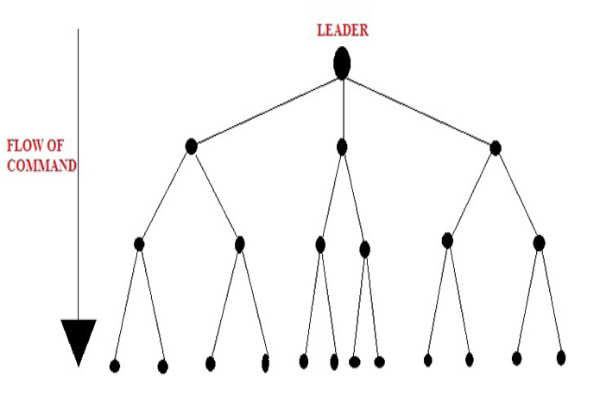
For example, Al-Suri blames Hosni Mubarak’s regime in Egypt for putting “an end to all the jihadi organizations in Egypt, one after the other.” Why – according to al-Suri – was this the case? In a lecture in 2000 at the Al Ghuraba training camp in Afghanistan for new al-Qaeda recruits, al-Suri drew the following diagram depicting the structure of these failed tanzims (modified by this author from a sketch in Cruickshank and Hage Ali).

Figure 1: A Schematic Description of a Hierarchical
Centralised Structure 


In this structure – as depicted in figure 1 – if any one individual (nodes) is arrested or otherwise compromised, the whole network – which is hierarchical, top-down, and centralised – would be compromised. As al-Suri noted: “In case you are caught, they are all caught.” But beyond this tradecraft consideration laid al-Suri’s deep distrust of centralisation of command – which had manifested in his not-infrequent run-ins with bin Laden. The goal of resistance through individual terrorism is not a struggle of the elite, al-Suri wrote. He explained:


The Call is to convoy the idea in succinct and detailed ways in order to enable the youth, who are determined to fight a jihad, to enter this call and form their own Units independently.


What al-Suri is referring to is not the same as what the press calls “lone wolves,” or “leaderless jihad.” Indeed, according to al-Suri, what connects these decentralised units responding to “the Call” to the larger System is an ideological link comprising of (1) a common aim, (2) common name, (3) common doctrinal jihadi program, and (4) a comprehensive educational program. Al-Suri requires his individual terrorists to commit to nothing “other than to believe in the idea, be absolutely certain in his intention, join the Call, and educate himself and those with him according to the Call’s program […].” Tures – in a debunking of the lore of lone-wolf terrorism – writes:


These “lone wolves,” are therefore anything but “lone.” Though the media, government, and even terrorists like ISIS themselves use the term, these new terror recruits are still connected to the group, even if such people do not have face-to-face contact or fly to the Middle East or some domestic compound for training.


Indeed, consider what happened in San Bernardino on 2 December 2015 where a married couple – self-radicalised (or “self-educated,” as al-Suri would have put it) killed 14 people. These were not “lone wolves”; rather, they were following a path al-Suri laid out for them. In other words, ISIS’s claim – that the couple were soldiers of the Caliphate – is literally true if the organisation has taken a leaf out of al-Suri’s individual terrorism strategy. But for the de-centralised form of individual terrorism to be truly successful, al-Suri recognised the need for mass mobilisation. One way to mobilise Muslims, al-Suri suggested at the Al Ghuraba lecture, was to harangue on the “degeneracy of the Western world” with “its sins, gays and lesbians.” [emphasis added] The attack on an Orlando gay nightclub in June this year – the worst mass-shooting in American history – seems to be right out of al-Suri’s Machiavellian playbook. The shooter, Omar Mateen, had pledged bay’at to ISIS.
The conception of nizam la tanzim and “individual-terrorism jihad” stands out in sharp relief to al-Qaeda. While the network structure of that organisation was known, bin Laden – according to many analysts – was seen as “promoting ‘a worldwide, religiously-inspired, professionally guided Islamist insurgency [emphasis added].” Professional guidance for al-Suri for individuals responding to the ‘Resistance Call’ individually is limited in the sense of “education” being the individual’s initiative. However, al-Suri would advocate the spreading of the requisite “legal, political, military and other sciences and knowledge that the Mujahidun need in order to carry out Resistance operations,” without compromising the decentralised structure of the system. Social media would prove handy for ISIS in implementing this tactic.

3.3. “Open-Front Jihad”
Al-Suri did recognise that the ultimate goal for the Islamic Resistance, as he called this putative global jihadi system, was holding physical territory. His conception of al-Qaeda had three key elements: a physical base (one meaning of Qaeda); a leadership; and a global world-view. The importance of the first cannot be underestimated in al-Suri’s world-view: in fact, the “greatest loss,” from the ensuing US invasion of Afghanistan following the 9/11 attacks, “was not the destruction of the terrorist organization but the downfall of the Taliban, which meant that al-Qaeda no longer had a place to train, organize, and recruit.” Al-Suri was categorical on the importance of seizing territory in the ‘Resistance Call,’ which he called the “strategic goal” of the whole enterprise. (His sub-theory of decentralised jihad, in contrast, was a tactical tool.) This is also something he shared with al-Qaeda’s then ‘Number Two’ Ayman Al-Zawahiri, who wrote:


If the successful operations against Islam’s enemies and the severe damage inflicted on them do not serve the ultimate goal of establishing the Muslim nation in the heart of the Islamic world, they will be nothing more than mere nuisance, regardless of their magnitude, that could be absorbed and endured, even if after some time, and with some losses.


Al-Suri imagined that this physical territory that could be controlled by the Islamic resistance system would also serve as a site for “Open-Front Jihad,” where enemies could be drawn in for asymmetric warfare. In fact, he identifies areas in the greater Middle East, Central Asia, and North Africa for such activity – preconditions related to geography, population, and political factors. Geography plays a particularly important role in his analysis – the ideal site for Open-Front jihad was to be “spacious in terms of area,” “varied with long borders,” “difficult to siege,” with inhospitable topography, and yet with sufficient resources for human sustenance. But his analysis was not generic in identifying most of the places in this vast area as suitable for Open-Front jihad. In fact, his analysis showed that the vast majority of the 55 states in this area were unsuitable for this kind of activity in not meeting one or more of the preconditions he listed.


He then goes on to identify the “Levant and Iraq,” as an ideal site for Open-Front jihad. “It has all the preconditions for the Open Fronts,” al-Suri writes. His reading of the situation in that area was striking in his analysis – written long before the so-called Arab Spring, the series of protests and uprisings that erupted in the Arab world as 2010 came to an end. He wrote:


The now emerging American occupation has declared its determination to remain on a long-term basis. They also prepare to extend their aggression to Syria in order to control the whole Levant […]


In al-Suri’s strategic theory, such a move by the Americans will draw them into an un-winnable conflict where the ‘defenders’ (the putative Islamic resistance) would have tactical as well as strategic advantage. This seems to also be the guiding principle of ISIS. Victory in this asymmetric conflict would lead to:


[…] victory for the Muslims, that [front] will be the centre of an Islamic Emirate, which should be ruled by God’s sharia. It will be a centre and destination for those around it emigrating to fight jihad in the cause of the country.


The extent of ISIS’s intended-Islamic State was mapped in March 2016 by the Financial Times(FT). That map, along with another one drawn up by the Institute for Study of War in July 2016 show how remarkably close ISIS’s territory-control/territory-of-influence strategy has been to al-Suri’s geographical prescriptions. At the time of writing this paper, the core ISIS control zone has a filamentary structure which would make it exceedingly difficult to attempt to seize it using ground troops. The control zone is embedded in a support zone that is vast, geographically speaking, and stretches from Fallujah to Mosul (in Iraq), from Mosul to Ayn al-Arab (in Syria), and all the way to Dera on the border of Jordan. Most of the territory controlled by ISIS is also of relatively low-altitude, which makes manoeuvres, and obtaining supplies, relatively easy.


3.4 Organising the ‘Resistance Call’
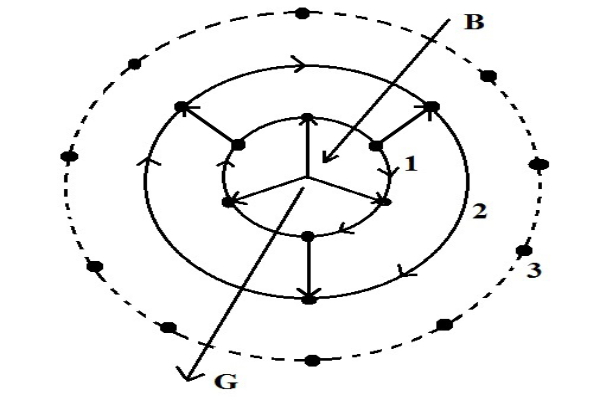
Al-Suri conceptualises how both the tactical, de-centralised structure of individual jihad and the strategic structure of open-front/territorial jihad mesh in terms of concentric circles. The innermost circle (around the centre who is the putative Caliph) is that of the “centralized unit,” tasked with “guidance, counselling, and calling to jihad,” as well as maintaining military balance in Open-Front areas. Essentially, this is the leadership circle.
The circle of “centralized unit” lies inside the circle of “de-centralized units” of fighters that are permitted to operate like a traditional secret organisation – trained directly, and to be “spread across the world.” Essentially, one may call these the garden-variety ISIS jihadists who travel to Syria or Iraq for training and return to their homelands to carry out attacks when called to do so.
This circle, in turn, is embedded within the final “Da’wah” circle “who participates in the Resistance without any organizational links with the Centre [i.e. Centralized Unit].” This circle has been responsible for most of the recent attacks in the US and Europe. The important point here is that authority radiates outwards from the centre – the Emir or the Caliph – and is managed through the institution of bay’at – the binding allegiance to the figurehead.


Figure 2 depicts al-Suri’s organisational-structure theory. The centralised unit is circle 1, the circle of de-centralised units is 2, and the Da’wah circle is 3, in that figure. Note that the entire structure is governed by the institution of bay’at (depicted by arrow B). Note, also, that as one moves from circles 1 to 3, individuals and units become more geographically dispersed (as depicted by arrow G). While individuals and units in circles 1 and 2 are allowed to communicate with each other and to their adjacent circles (depicted through connecting arrows), such is not the case with the outer circle 3.

How does al-Suri’s organisational structure match the typologies of attackers being advanced in light of the recent terrorist attacks in Europe? Gartenstein-Ross and Barr – in way of debunking the “myth of lone wolf terrorism,” advanced one such typology. In their analysis, there are four kinds of attackers and attacks. In the first kind, attackers are sent by an outfit from abroad to carry out operations. 

In al-Suri’s jargon, these would be attackers in circle 2. 
Then there are attackers – in the Gartenstein-Ross and Barr typology – who are in touch with each other virtually, for purposes of coordination. In al-Suri’s structure, these would also be attackers in circle 2 – or between circles 2 and 3. 

The third category of attackers are ones “who are in contact with a militant group via online communications but do not receive specific instructions about carrying out an attack.” These would be – according to al-Suri – individuals in the Daw’ah circle 3. 

Finally, in the Gartenstein-Ross and Barr typology, there are true lone wolves who act completely independently of the ‘parent’ network. This, too would be, according to al-Suri’s theory, individuals in circle 3 – only if they pledge allegiance to the Caliph or the Emir (who is al-Baghdadi, in case of ISIS). The similarity between the Gartenstein-Ross and Barr typology and al-Suri’s theory is remarkable.


Figure 2: A Schematic Description of Al-Suri’s
Organisational Theory


4. Al-Suri’s ISIS: The Way Forward

If ISIS indeed operates out of al-Suri’s playbook, what is in store for that organisation?
One would expect to see the frequency of individual jihadists attack to continue and keep pace, fuelled by self-radicalisation. Al-Suri, as this paper has explained, placed a premium on this tactic. One would also expect ISIS to continue to hold territory even at significant military costs. After all, as al-Suri explains, the whole point of the enterprise of Islamic Resistance is to control territory and establish an Islamic State. Therefore analysts who expect ISIS to completely morph into a de-centralised structure would be well-advised to rethink their assumptions.
Al-Suri had displayed a great interest in weapons of mass destruction (WMDs). A US government assessment of al-Suri puts him as “an expert in the use of poison.” Individual expertise aside, al-Suri is known to have worked quite closely with al-Qaeda’s leading expert on unconventional weapons Abu Khabab al-Masri. Al-Suri himself is said to have written on biological weapons, and has called for the use of WMDs against the US and allies “to reach a strategic decisive outcome.” ISIS has already used chemical weapons in Syria and Iraq, but the real question is whether it would do so outside its own ‘territory’. It is unlikely if most of the attacks outside Syria and Iraq are carried out by individual jihadists in the Daw’ahcircle. Therefore the most likely ISIS WMD-use threat lies against American and allied troops in any possible ground invasion.
The most important point with the al-Suri-and-ISIS story is polemical. Blinded by indiscriminate violence, it is easy to conclude that ISIS is a nihilistic group driven by eschatological motives. It is rather more difficult to accept instinctively that there may be a concrete strategic theory behind their actions. But to strive to understand is not the same as to extend empathy. This paper has argued that the foundation of ISIS strategy was provided by one man – Abu Mus’ab al-Suri. Indeed, in order to dissect ISIS strategy, more research is needed ab
out ideologues and theorists like al-Suri – without empathy, for sure, but not without curiosity.


The author thanks the two individuals who served as referees for their useful remarks which helped improve the quality of this paper. He also thanks Ms. Nisha Verma, ORF Librarian, for arranging research material at short notices.
This piece was first published on Observer Research Foundation and has been republished here with permission.

Also Read: How To Drive ISIS Fighters Out Of Fallujah

_

https://swarajyamag.com/world/abu-musab-al-suri-the-inspiration-behind-isis-part-ii
_
eof


Meet 'PayPal CEO' Alex Chriss - Why Should This Person Be Interesting To You

..funds vanish from user visibility into corporate vaults under the guise of "security reviews" or "processing holds." F...