sunnuntai 14. maaliskuuta 2021

Does alcohol kill germs? Yes, as long as the solution is strong enough


  • How to Use Alcohol to Treat a Cold
  • 7 Best Alcoholic Drinks For Sore Throat, Cough, and Cold
  • 12 Sick Day Drinks
  • Hot buttered rum
  • Hot Buttered Rum Recipe
  • CDC: "Ethyl alcohol, at concentrations of 60%–80%, is a potent virucidal agent inactivating all of the lipophilic viruses (e.g., herpes, vaccinia, and influenza virus) and many hydrophilic viruses..."
  • Alcohol Percentage in Drinks
  • Alcohol Content Database
  • 10 Of The Strongest Alcoholic Drinks From Around The World


___

Does alcohol kill germs? Yes, as long as the solution is strong enough


This article was medically reviewed by Tania Elliott, MD, who specializes in infectious diseases related to allergies and immunology for internal medicine at NYU Langone Health.

Medically Reviewed

Cleaning products should contain at least 70% alcohol.


  • Alcohol does kill germs, as long as the solution you are using is the right percentage of alcohol. 
  • Hand sanitizers should be 60% to 95% alcohol to kill germs most effectively. 
  • Alcohol-based disinfecting solutions should be at least 70% alcohol and can be used to clean things like table surfaces, light switches, and mobile phones.
  • This story is part of Insider's guide on How to Kill Germs.

Bacteria, viruses, fungi, protozoans, and helminths are all types of germs that can spread infection and disease. Your immune system may protect you from these germs most of the time, but you can also take preventive measures to kill germs and reduce the spread of sickness. 

Alcohol has been used as a hand sanitizer since 1888, and the disinfecting qualities of ethanol and isopropanol are well-proven. While washing hands for 20 seconds with soap and water is always preferable, alcohol-based hand sanitizer can be a good alternative, if used properly. Here's what you need to know. 

Yes, alcohol does kill germs 

A 2020 review of alcohol-based hand sanitizers found that sanitizers which were 60% to 95% alcohol kill germs most effectively, provided that at least 2.4 milliliters of hand sanitizer was applied for 25 to 30 seconds. 

The Centers for Disease Control and Prevention (CDC) says alcohol-based hand sanitizers must contain at least 60% alcohol to be effective. Alcohol kills germs by breaking down its cell walls. Depending on the brand, hand sanitizers may also contain additives like aloe vera to make it more moisturizing, or carbomers to change the consistency.

Most hand sanitizers and disinfectants use isopropyl or ethyl alcohol. For example, ethanol is an effective virus-killer, against infections like herpes and the flu, and isopropyl is even more effective against bacteria.  

"Ethyl alcohols will kill viruses, funguses, and bacteria, but do not kill bacterial spores," says Johannes Wessolly, Medical Director of Miskawaan Health Group. "Depending on the type of alcohol used, it can kill or render a wide variety of germs inactive." 

How to use alcohol to kill germs 

Most cleaning products, disinfecting wipes, and hand sanitizers contain enough alcohol to kill germs. "For disinfection, alcohol solutions that have at least 70% alcohol, as well as most common EPA-registered household disinfectants, should be effective," says Wessolly. "Check the label to make sure before use."  

To kill germs, the CDC recommends cleaning regularly touched items, like light switches, handles, and faucets, which can be done at home and in the workplace

"Generally, keep surfaces clean with a household disinfectant," says Manish Trivedi, MD, director at the Division of Infectious Diseases for AtlantiCare, explains that "specifically areas that are frequently touched such as doorknobs, phones, computer keyboard, and mouse."

In fact, your phone likely carries more germs than a toilet seat, and it's often overlooked when cleaning. Apple recently updated its phone-cleaning instructions, recommending "a 70 percent isopropyl alcohol wipe or Clorox Disinfecting Wipes" to wipe down the phone's exterior, avoiding getting moisture in the openings. 

When disinfecting items with alcohol-based products, the CDC suggests following these steps, along with reading the instructions on the label: 

  • Make sure the product is at least 70% alcohol.
  • Ensure the area has good ventilation. 
  • Use gloves, preferably disposable ones.
  • Wash hands with soap and water once gloves are removed.

While scrubbing surfaces with alcohol-based cleaners may help kill germs, washing your hands is still the best defense against viruses and bacteria. 

"There is no practical way to sterilize or sanitize everything we come in contact with, and no need to either," Trivedi says. "Wiping down areas and objects that serve as a reservoir for germs you encounter may be effective in preventing the spread of disease, but recognize these organisms are typically spread and transported by our hands."

https://www.insider.com/does-alcohol-kill-germs

The coronavirus pandemic

Related stories about keeping germ-free:

___

How to Use Alcohol to Treat a Cold

https://www.wikihow.com/Use-Alcohol-to-Treat-a-Cold


7 Best Alcoholic Drinks For Sore Throat, Cough, and Cold

https://www.insidermonkey.com/blog/7-best-alcoholic-drinks-for-sore-throat-cough-and-cold-527341/?singlepage=1


12 Sick Day Drinks

https://www.supercall.com/entertaining/best-alcohol-to-drink-when-sick


Hot buttered rum

https://en.wikipedia.org/wiki/Hot_buttered_rum


Hot Buttered Rum Recipe

https://www.thepurplepumpkinblog.co.uk/hot-buttered-rum-recipe/


CDC: "Ethyl alcohol, at concentrations of 60%–80%, is a potent virucidal agent inactivating all of the lipophilic viruses (e.g., herpes, vaccinia, and influenza virus) and many hydrophilic viruses..."

https://web.archive.org/web/20121221081021/http://www.cdc.gov/hicpac/disinfection_sterilization/6_0disinfection.html


Alcohol Percentage in Drinks

https://sunrisehouse.com/stop-drinking-alcohol/percentage-contents/


Alcohol Content Database

http://www.alcoholcontents.com/


10 Of The Strongest Alcoholic Drinks From Around The World

https://www.scoopwhoop.com/food/worlds-strongest-alcoholic-drinks/

___

Long-term Mask Use May Contribute to Advanced Stage Lung Cancer

  • Microbiologists agree that frequent mask wearing creates a moist environment in which microbes are allowed to grow and proliferate before entering the lungs. Those foreign microbes then travel down the trachea and into two tubes called the bronchi until they reach small air sacks covered in blood vessels called alveoli.
  • Dentists have also been warning about a phenomenon known as ‘mask mouth’ in which patients are arriving back to the dental office with an increase in gingivitis and tooth decay as high as 50% in a period of just a few months since mask mandates began.

Long-term Mask Use May Contribute to Advanced Stage Lung Cancer, Study Finds

ER Editor: Here is the link to which this report refers, from the journal Cancer Discovery – Lower Airway Dysbiosis Affects Lung Cancer Progression. ‘Dysbiosis’ means microbial imbalance.

********

Long-term Mask Use May Contribute to Advanced Stage Lung Cancer, Study Finds

All Global Research articles can be read in 27 languages by activating the “Translate Website” drop down menu on the top banner of our home page (Desktop version).

***

A recent study in the journal Cancer Discovery found that inhalation of harmful microbes can contribute to advanced stage lung cancer in adults. Long-term use of face masks may help breed these dangerous pathogens.

Microbiologists agree that frequent mask wearing creates a moist environment in which microbes are allowed to grow and proliferate before entering the lungs. Those foreign microbes then travel down the trachea and into two tubes called the bronchi until they reach small air sacks covered in blood vessels called alveoli.

“The lungs were long thought to be sterile, but we now know that oral commensals–microbes normally found in the mouth–frequently enter the lungs due to unconscious aspirations.” – Leopoldo Segal, Study Author and Director of the Lung Microbiome Program and Associate Professor of Medicine at New York University Grossman School of Medicine

According to the study, after invading the lungs, these microbes cause an inflammatory response in proteins known as cytokine IL-17.

“Given the known impact of IL-17 and inflammation on lung cancer, we were interested in determining if the enrichment of oral commensals in the lungs could drive an IL-17-type inflammation and influence lung cancer progression and prognosis,” said Segal.

While analyzing lung microbes of 83 untreated adults with lung cancer, the research team discovered that colonies of Veillonella, Prevotella, and Streptococcus bacteriawhich may be cultivated through prolonged mask wearing, are all found in larger quantities in patients with advanced stage lung cancer than in earlier stages. The presence of these bacterial cultures is also associated with a lower chance of survival and increased tumor growth regardless of the stage.

Additionally, research into the cultivation of Veillonella bacteria in the lungs of mice found that the presence of such bacteria leads to the emergence of immune-suppressing cells, as well as inflammatory ones such as cytokine IL-17.

“Given the results of our study, it is possible that changes to the lung microbiome could be used as a biomarker to predict prognosis or to stratify patients for treatment.” – Leopoldo Segal

As more evidence emerges pertaining to the long-term effects of mask mandates and lock downs, doctors and scientists are beginning to reconsider whether these authoritarian measures really are doing more harm than good. One Canadian public health expert named Dr. Aji Joffe found in a related study that lock downs cause “at least ten times” more damage than benefit.

In a recent working paper by researchers at Harvard, Duke, and John Hopkins Universities, academics concluded that “for the overall population, the increase in the death rate following the COVID-19 pandemic implies a staggering 0.89 and 1.37 million excess deaths over the next 15 and 20 years, respectively.”

Since forced mask wearing began, dermatologists have coined the term ‘maskne’ to describe an onset of pimples near the mouth caused by masks clogging up pores with oil and bacteria. This can be caused by either disposable or cloth masks.

Dentists have also been warning about a phenomenon known as ‘mask mouth’ in which patients are arriving back to the dental office with an increase in gingivitis and tooth decay as high as 50% in a period of just a few months since mask mandates began.

This discovery sheds light on the growing evidence of harm caused by long-term mask wearing.

************

Source

Phillip Schneider is a staff writer for Blacklisted News. To see more of his work, you can follow his Facebook Page, become a subscriber on the free speech social network Minds, or support his efforts by becoming a contributor via Patreon.

Inserted image is from Blacklisted News

Featured image: create jobs 51/Shutterstock.com

Published to The Liberty Beacon from EuropeReloaded.com


••••

The Liberty Beacon Project is now expanding at a near exponential rate, and for this we are grateful and excited! But we must also be practical. For 7 years we have not asked for any donations, and have built this project with our own funds as we grew. We are now experiencing ever increasing growing pains due to the large number of websites and projects we represent. So we have just installed donation buttons on our websites and ask that you consider this when you visit them. Nothing is too small. We thank you for all your support and your considerations … (TLB)

••••

Comment Policy: As a privately owned web site, we reserve the right to remove comments that contain spam, advertising, vulgarity, threats of violence, racism, or personal/abusive attacks on other users. This also applies to trolling, the use of more than one alias, or just intentional mischief. Enforcement of this policy is at the discretion of this websites administrators. Repeat offenders may be blocked or permanently banned without prior warning.

••••

Disclaimer: TLB websites contain copyrighted material the use of which has not always been specifically authorized by the copyright owner. We are making such material available to our readers under the provisions of “fair use” in an effort to advance a better understanding of political, health, economic and social issues. The material on this site is distributed without profit to those who have expressed a prior interest in receiving it for research and educational purposes. If you wish to use copyrighted material for purposes other than “fair use” you must request permission from the copyright owner.

••••

Disclaimer: The information and opinions shared are for informational purposes only including, but not limited to, text, graphics, images and other material are not intended as medical advice or instruction. Nothing mentioned is intended to be a substitute for professional medical advice, diagnosis or treatment.

Share this...

https://www.thelibertybeacon.com/long-term-mask-use-may-contribute-to-advanced-stage-lung-cancer-study-finds/

___


perjantai 12. maaliskuuta 2021

A tour of the wonderful world of mask mandates and their results

 ___

27 Oct 20, 17 tweets, 6 min read
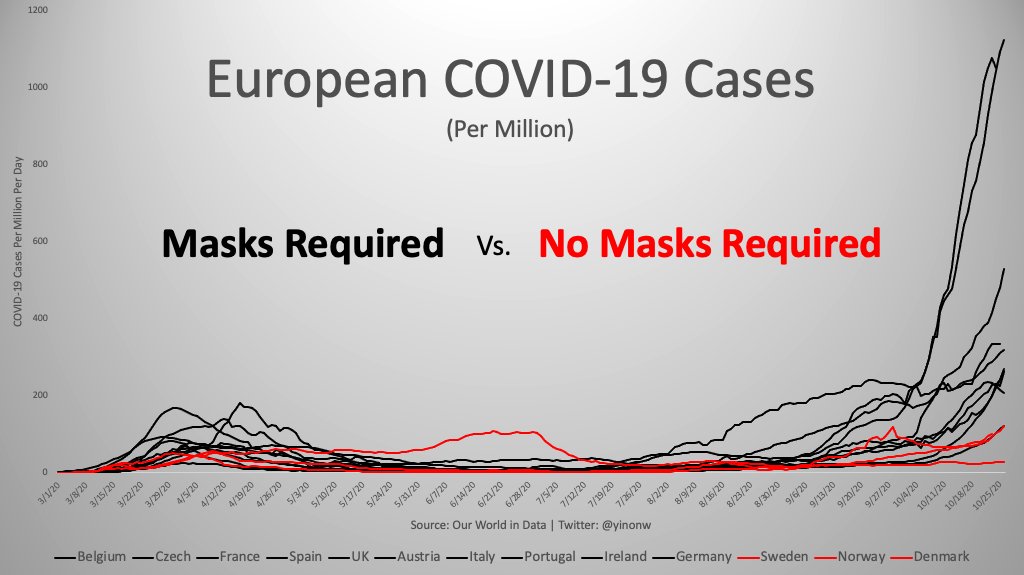
Let's take a brief journey into the success (or lack thereof) of masks in preventing the spread of coronavirus.

Come with me on a tour of the wonderful world of mask mandates and their results.

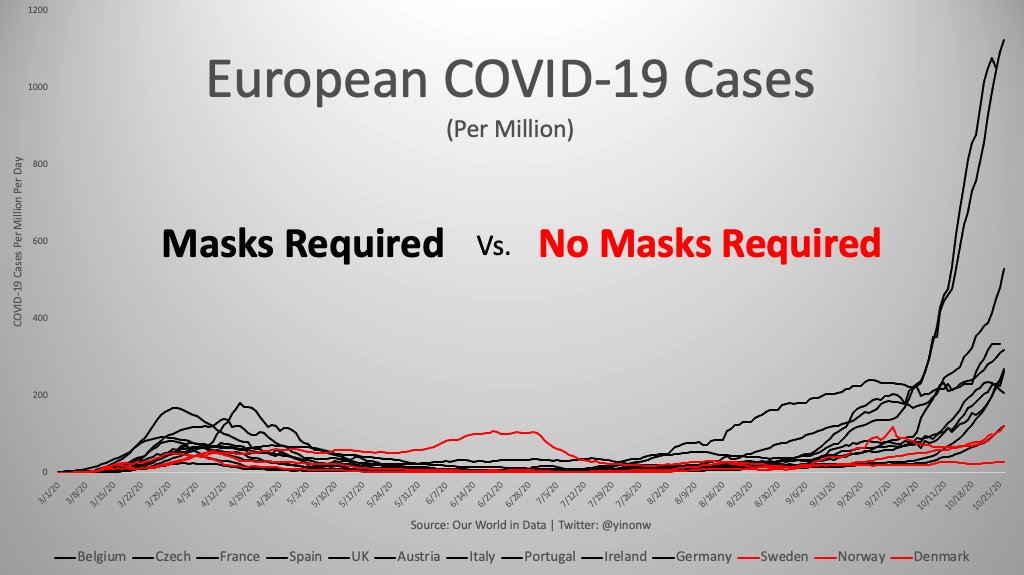
Here is a preview of our journey.

(1/16)Image
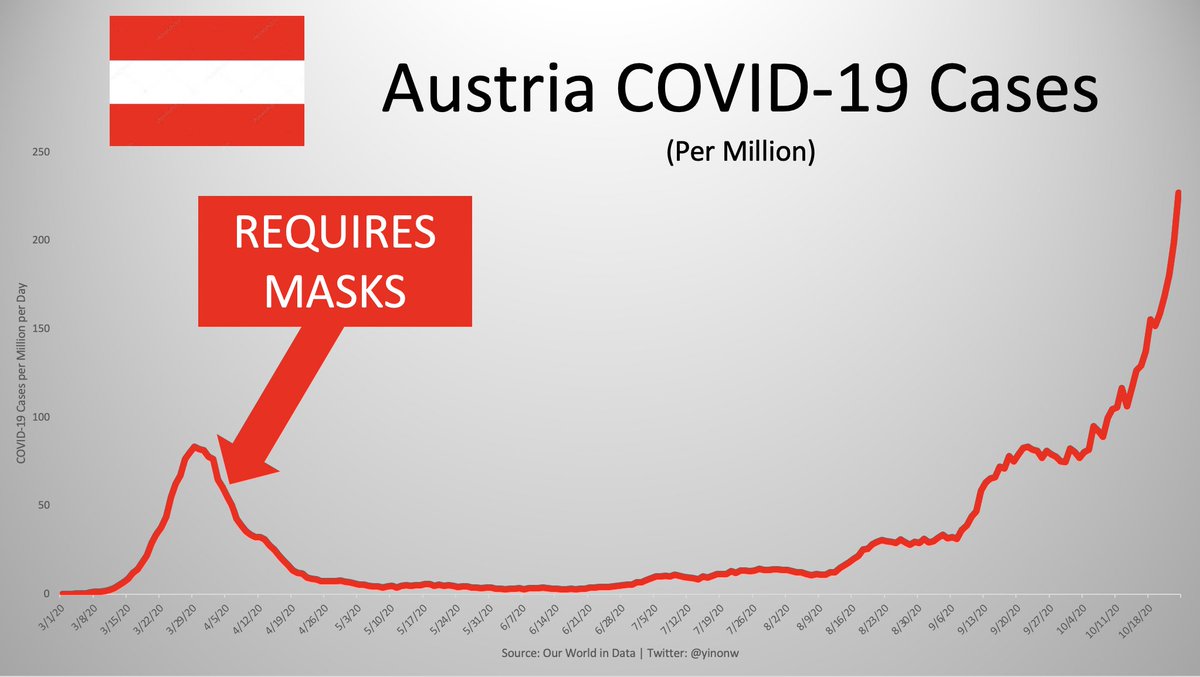
First up is Austria. It was one of the first to require masks and it did so about 10 days after its cases began to go down. The downtrend with masks did not change.

After wearing masks for 6 months, cases are now 4x where they were when they mandated masks, and climbing.
(2/16)Image
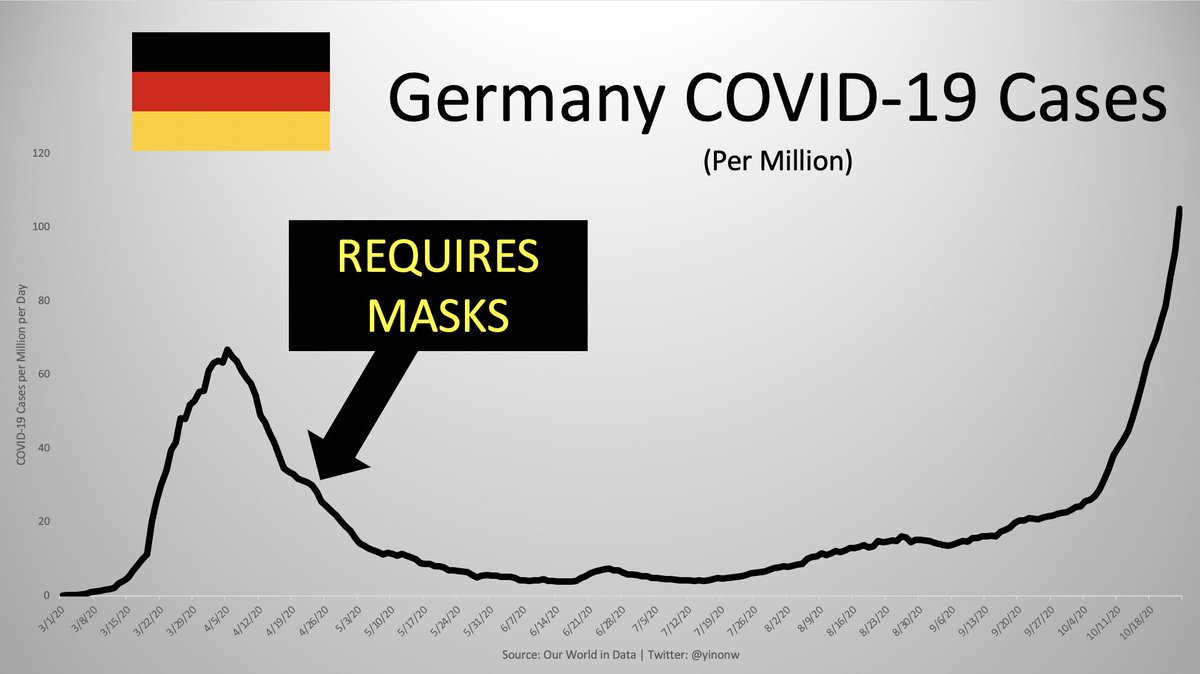
Next to mandate was Germany, everybody's favorite success story, until it's not.

It mandated masks about half way down its original recovery. After wearing masks for half a year, their cases are now climbing quickly.

(3/16)Image
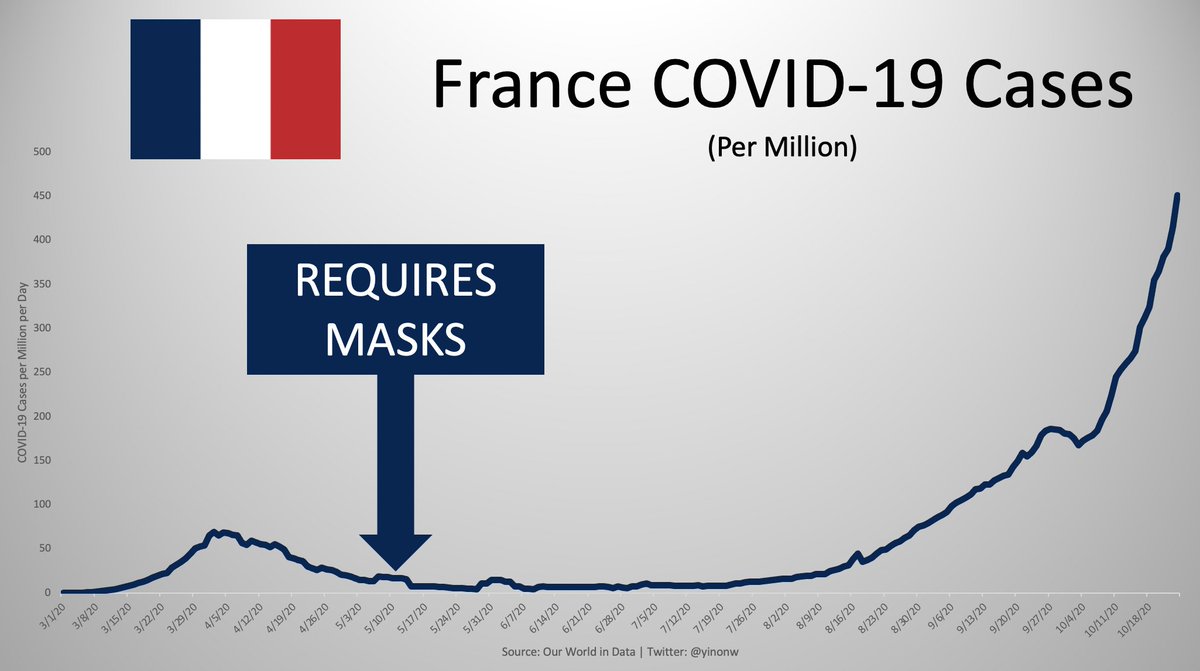
Let's visit Germany's historical foe, France.

The French waited a little longer to mandate masks. They now have around 1000% the daily cases than when they mandated masks despite having one of the highest mask compliance levels in the world.

(4/16)Image
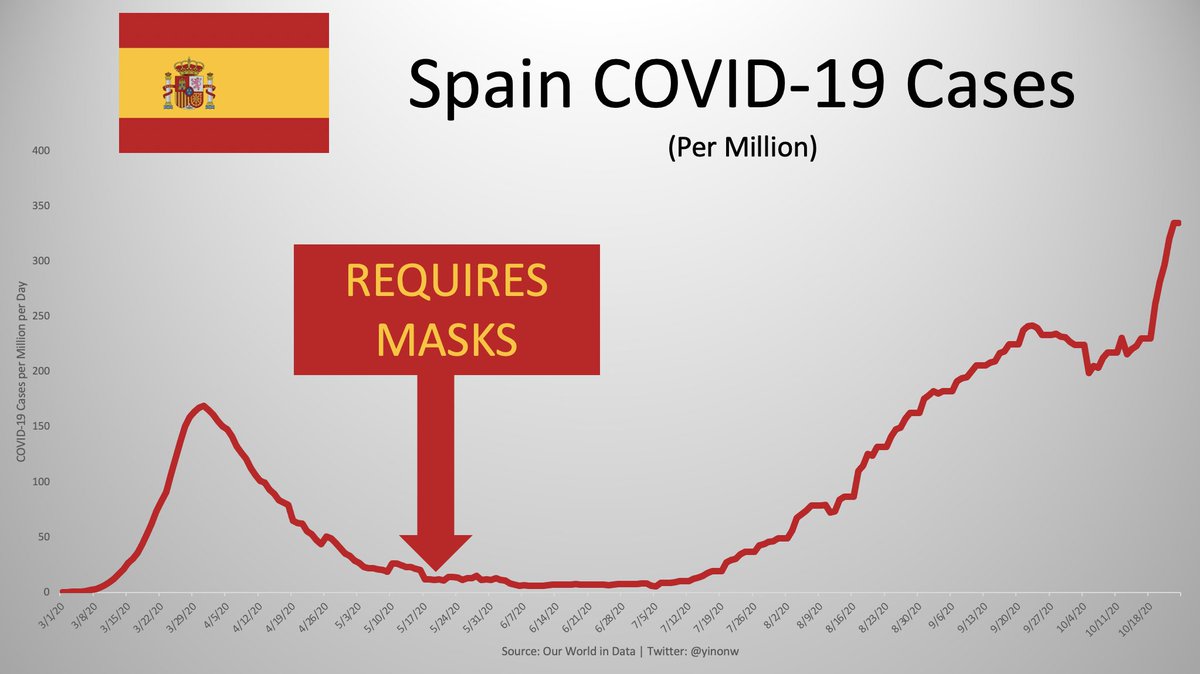
Across the Pyrenees, Spain was not far behind its French neighbor with a mandate. Spain required masks when cases were near zero and has the highest compliance of mask wearing in all European.

Now Spain is at around 1500% the level of cases than when it mandated masks.

(5/16)Image
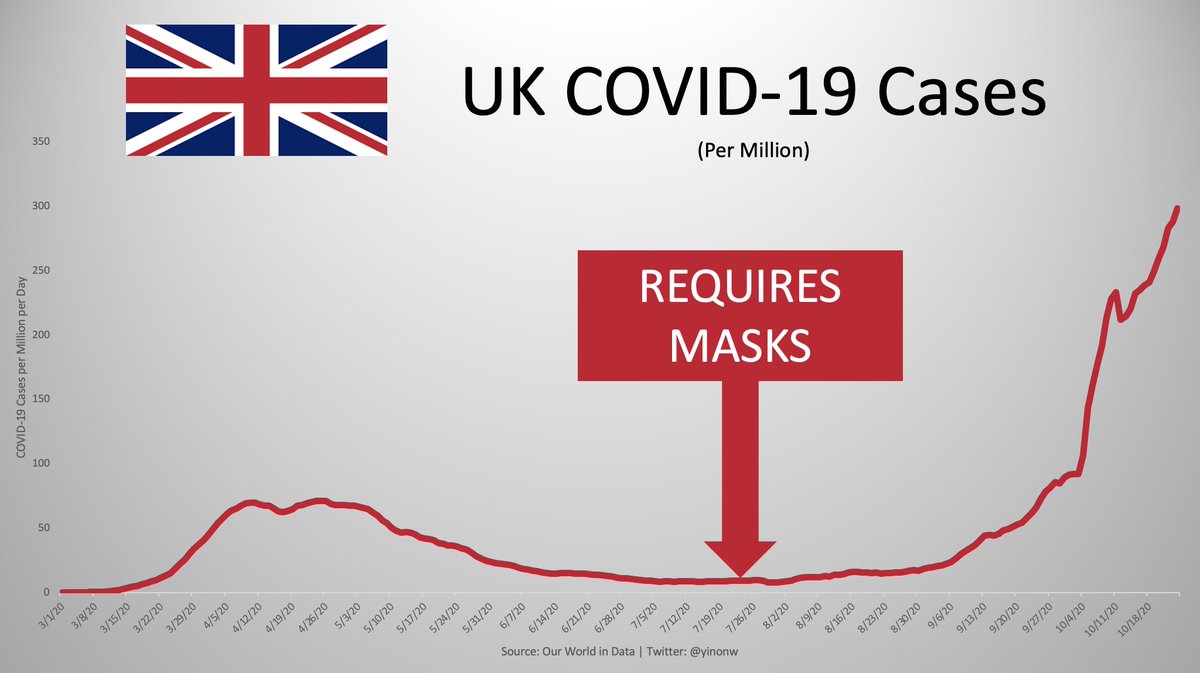
The British really held out on masks for a while. It was a bit late to the European party of wearing masks.

Within 3 months of requiring masks it's now at around 1500% cases despite having one of the highest mask compliance records in Europe.

(6/16)Image
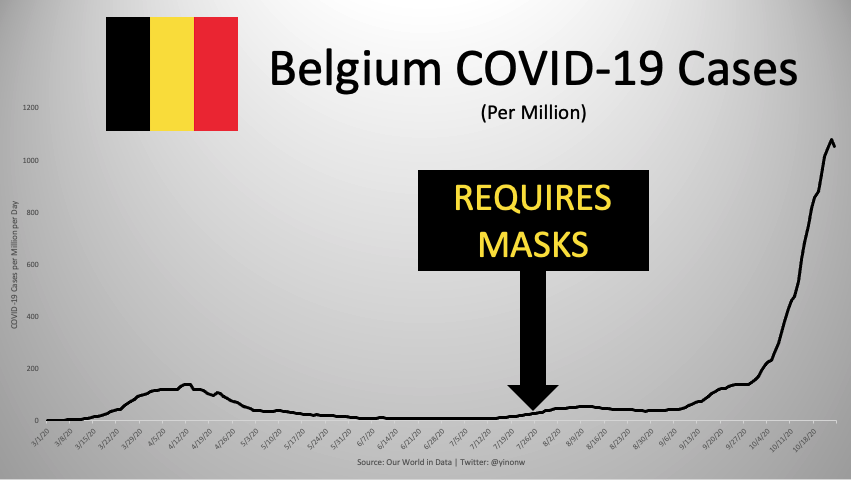
Our next visit takes us across the English channel as we travel to Belgium. It required masks shortly after the British and now has possibly the highest rate of cases in the world.

(7/16)Image
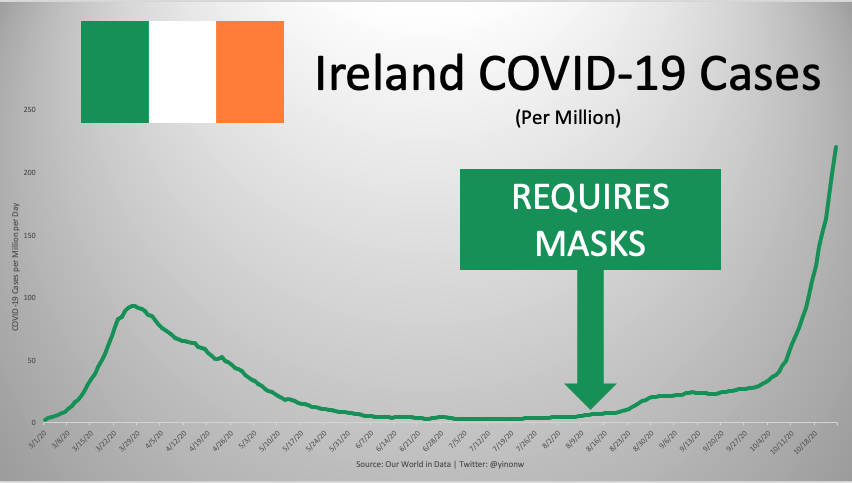
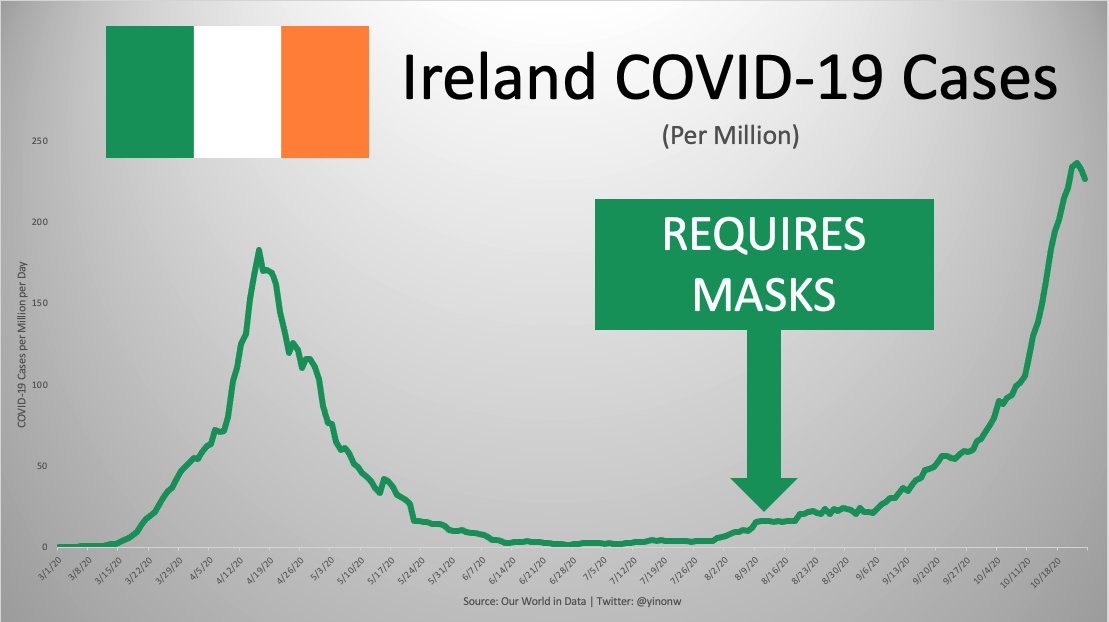
Another British neighbor which hasn't done so well is the beautiful country of Ireland. Within 2 months of mandating masks, it is now back in lockdowns and has over 1000% more cases.

(8/16)Image
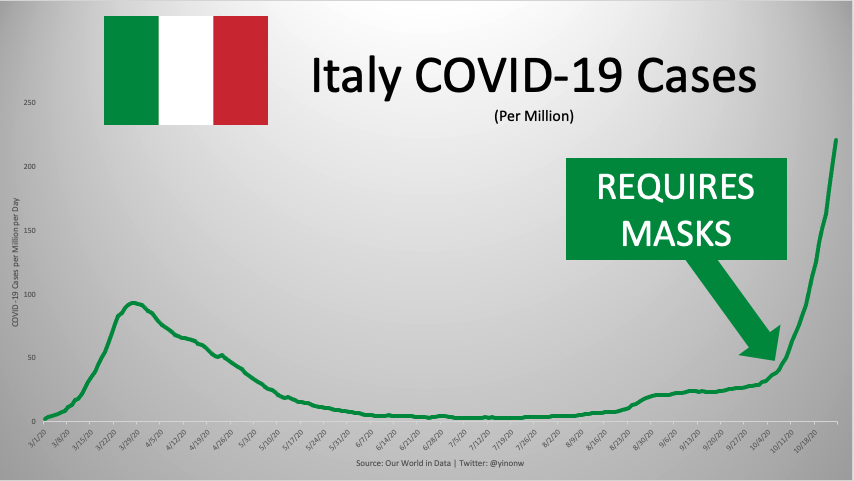
Our last stop on the grand tour is Italy, the original European hot spot. It had high mask compliance despite no national mandate.

Skyrocketing cases finally compelled them to create one of the strictest mask mandates in the world, but the results have been predictable..

(9/16)Image
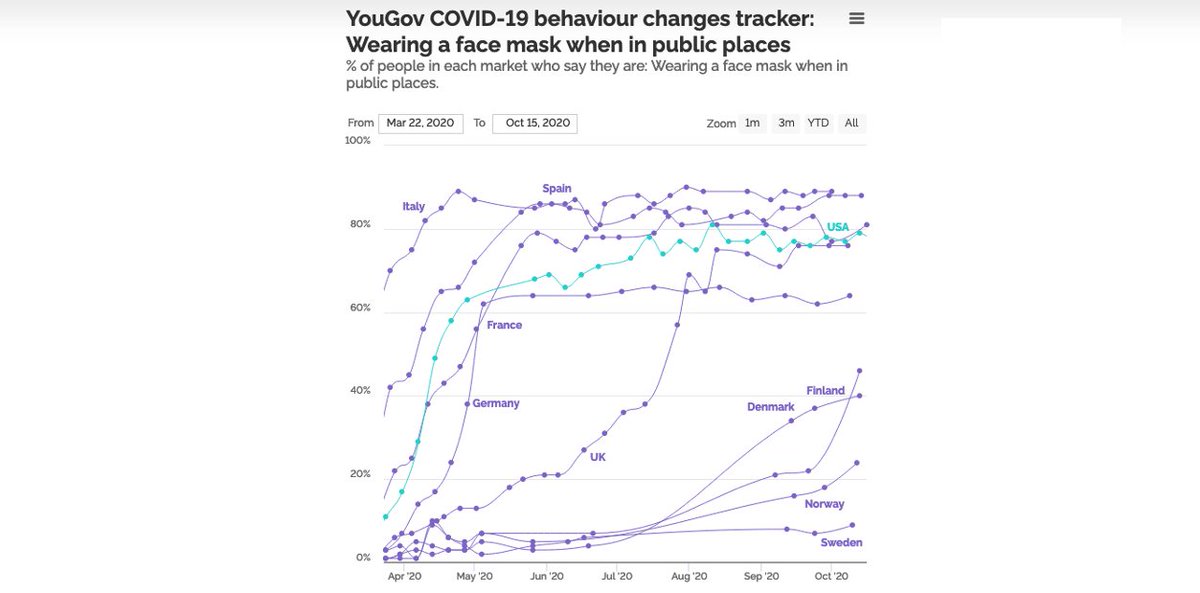
How about the US? Americans have proven to be highly compliant with mask wearing, even higher than the Germans and similar to the highest levels of compliance found across Europe.

(10/16)Image
And where has that taken the US? We know not where we want to be.

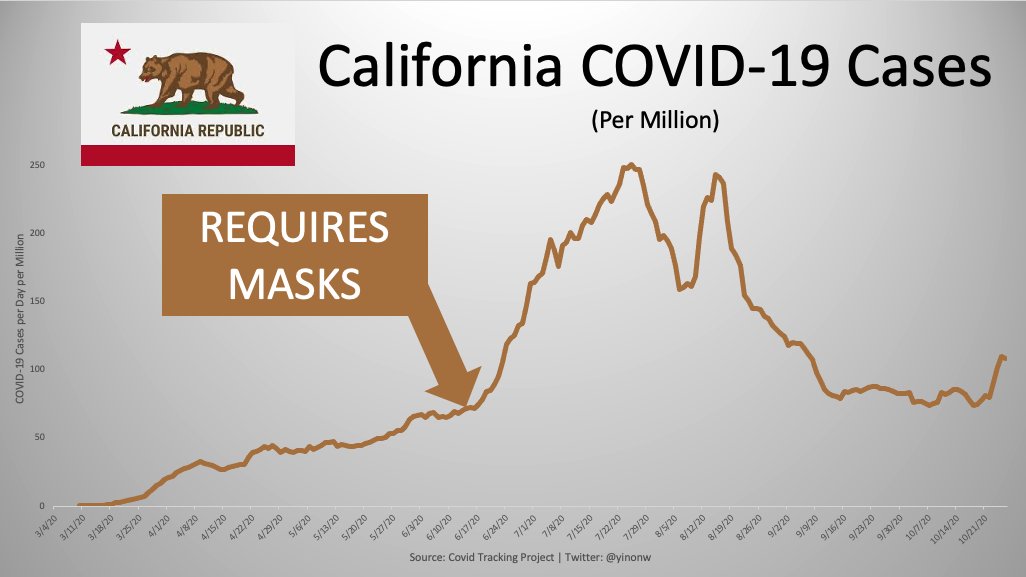
For example. progressive California required masks in June but cases still went up by over 300% and the state remains heavily locked down to this day.

(11/16)Image
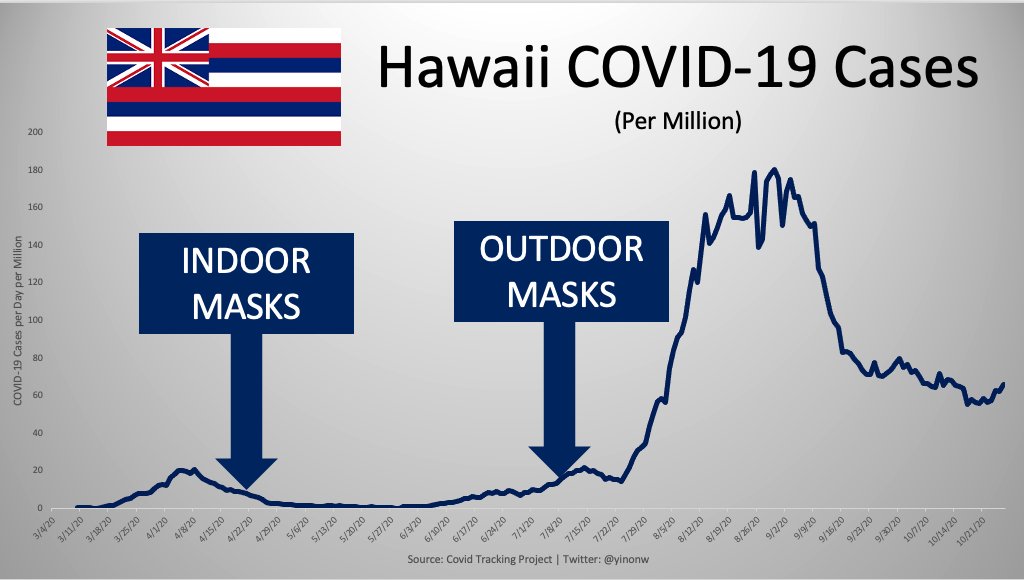
Hawaii suffered one of the most economically devastating lockdowns of all the US states. It was also an early mover on mandating masks both indoors and out doors, but cases still went up by almost 1000%.
(12/16)Image
Why don't masks work? For one, if you read the fine print on any consumer mask you will see something along the line of "not intended for medical purposes and has not been tested to reduce the transmission of disease." 🤔

(13/16) 
Meanwhile countries with no mask mandates such as Sweden, Norway, and Denmark have not yet hit explosive cases. They might still, but obviously it's not due to lack of masks.

Similarly some Asian countries have had few cases, but the US/Europe shows it's not the masks.

(14/16)Image
For those looking for a brief explainer on masks, simply watch this quick video to get a better understanding of why masks do very little except in crowded indoor areas... videopress.com/v/4egEyh2b

(15/16) 
For those looking for a deeper dive into the science of masks and why for decades scientists were against mass use of mask and what politically changed, see here below, and follow me for more updates.

👇🏽👇🏽👇🏽


(16/16) 
Correction on Ireland, but same result and same looking graph. It can be confusing to keep track when all these countries have the same runaway cases after mandating masks.

(8A/16)Image

• • •

Missing some Tweet in this thread? You can try to force a refresh


https://threadreaderapp.com/thread/1321177359601393664.html

__

___


Meet 'PayPal CEO' Alex Chriss - Why Should This Person Be Interesting To You

..funds vanish from user visibility into corporate vaults under the guise of "security reviews" or "processing holds." F...